
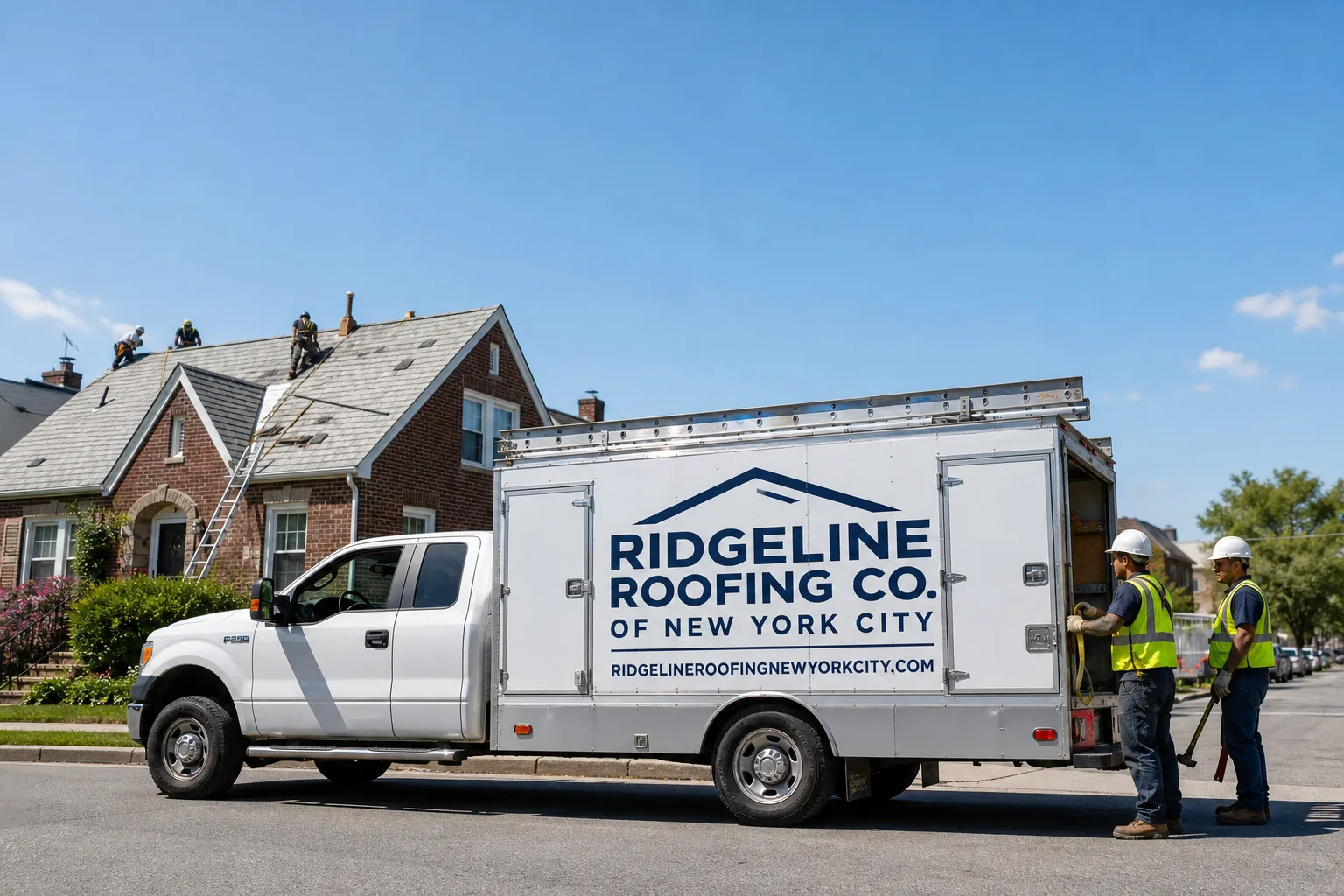
Fast, Reliable Roof Replacement & Installation Across Jackson Heights
A full roof replacement on a typical Jackson Heights co-op building runs $18,000-$45,000 depending on size, access, and whether Landmarks Preservation Commission approval is required. Most complete tear-offs on the neighborhood’s pre-war flat-roofed garden apartments take 3-5 working days once permits are in hand, though LPC-designated buildings need an additional 4-8 weeks for approvals. Ridgeline Roofing Co. has worked in Jackson Heights since 2016, and our Roof Replacement & Installation crew knows the difference between a straightforward DOB permit pull and the layered approvals these historic co-ops demand.
We answer our phones live, 24 hours a day, at (866) 756-1978. When water starts coming through your ceiling on a Saturday night in the middle of a January freeze-thaw cycle, you will reach a person who dispatches a technician, not a recording that promises a callback.
Jackson Heights is not like the rest of Queens. The neighborhood’s 1920s-1930s Queensboro Corporation cooperative garden apartments, many protected within the Jackson Heights Historic District, carry flat roofs that have accumulated three or more layers of built-up tar-and-gravel over the decades. The masonry parapet walls and coping stones that cap these buildings are chronic failure points, and the co-op board governance structure means a single roofing contract requires resident sign-off before a shingle is touched. We have navigated these buildings for over 42 years. We know the superintendents, the board treasurers, and the specific paperwork the LPC requires for a Certificate of No Effect on a roof replacement.
Why Ridgeline Roofing Co. of New York City Is Jackson Heights’s Preferred Roof Replacement & Installation Company
Sal Benedetto founded Ridgeline Roofing Co. in 1984, and we have been climbing Jackson Heights roofs ever since. Our reputation here was built one building at a time, starting with the pre-war co-ops along 35th Avenue and 37th Avenue where word spread from board to board that we returned phone calls and stood behind our work.
We carry a strong local reputation backed by decades of repeat business from Jackson Heights co-op boards and individual homeowners. Our technicians are background-checked, uniformed, and trained to document every inspection with photos taken from your actual roof, not the sidewalk. When we inspect a building on 82nd Street or near Travers Park, the board receives a dated, photo-documented report they can circulate to residents before any vote.
Response time to Jackson Heights is typically same-day or next-day for inspections, and we maintain relationships with local suppliers to avoid the material delays that stretch projects for out-of-town crews. Our live phone answering means a Jackson Heights homeowner or board president can reach us at 2:00 AM during a storm and speak to a person who understands the urgency of a parapet leak in a building with plaster ceilings.
Our 90-Day Done Right Promise applies to every Jackson Heights job: if something is not right, we come back and make it right. No paperwork, no arguing, no runaround. That promise has been in writing since 2016.
Our Roof Replacement & Installation Services in Jackson Heights
Flat Roofing
Flat roofing is the backbone of our Jackson Heights work. Virtually every pre-war co-op and rowhouse in the neighborhood features a low-slope or fully flat roof with masonry parapet walls, and these systems have typically accumulated multiple layers of old felts, asphalt, and tar-and-gravel. A complete tear-off is almost always necessary; overlays are rarely advisable because the accumulated weight exceeds deck load limits and conceals rot. We install GAF and CertainTeed modified-bitumen systems designed for the urban heat island stress that accelerates thermal cracking in this dense neighborhood. Our crew rebuilds failing parapet copings and step flashings as part of the standard scope, not as an upsell.
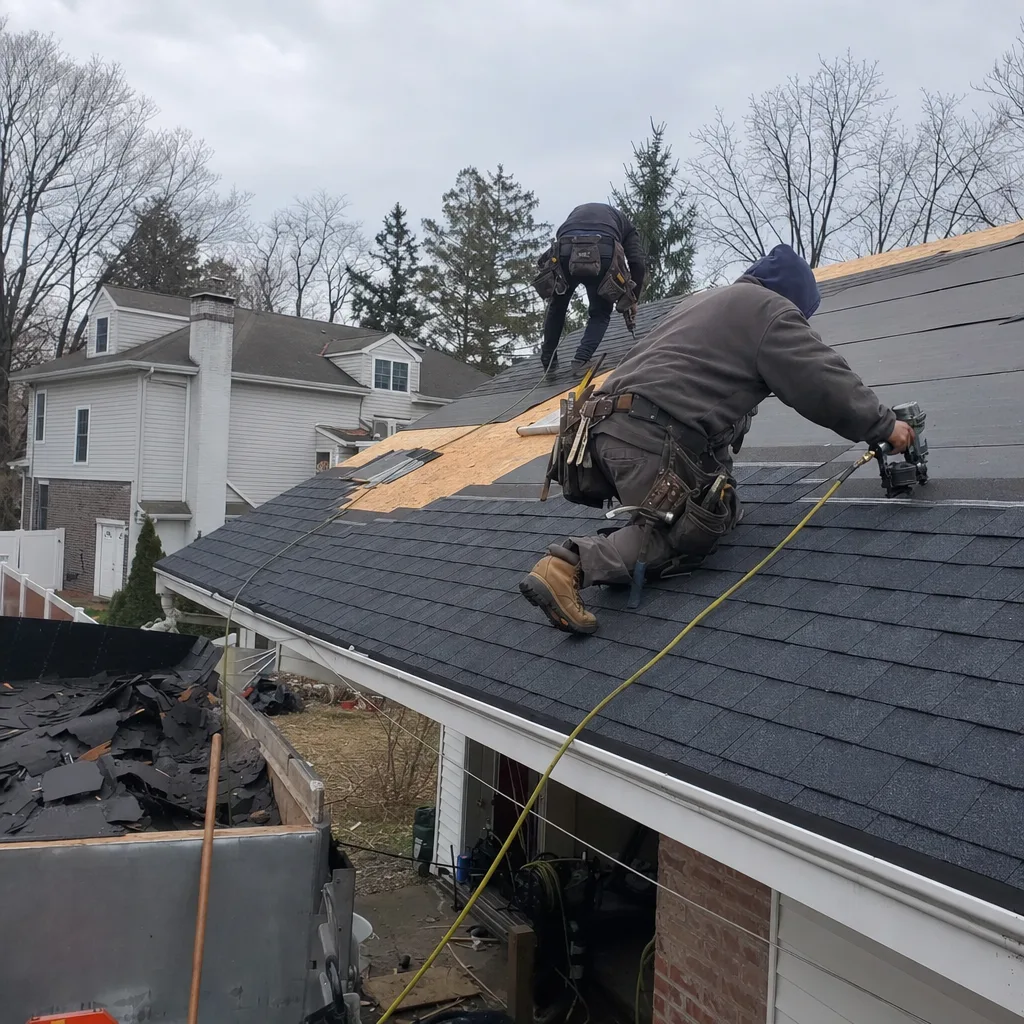
Full Roof Replacement
A full roof replacement on a Jackson Heights garden apartment building is a different project than a suburban tear-off. We recently tore off a three-ply built-up roof at a 1937 co-op on 35th Avenue in the Jackson Heights Historic District. The old tar-and-gravel membrane had thermal cracks from decades of urban heat island stress; we replaced it with a GAF modified-bitumen system and rebuilt the failing parapet copings. The job required LPC sign-off before DOB could issue the permit, a process we navigated for the co-op board. We handle the LPC application, the DOB filing, and the board presentation so residents are not left managing bureaucracy.
Metal Roofing
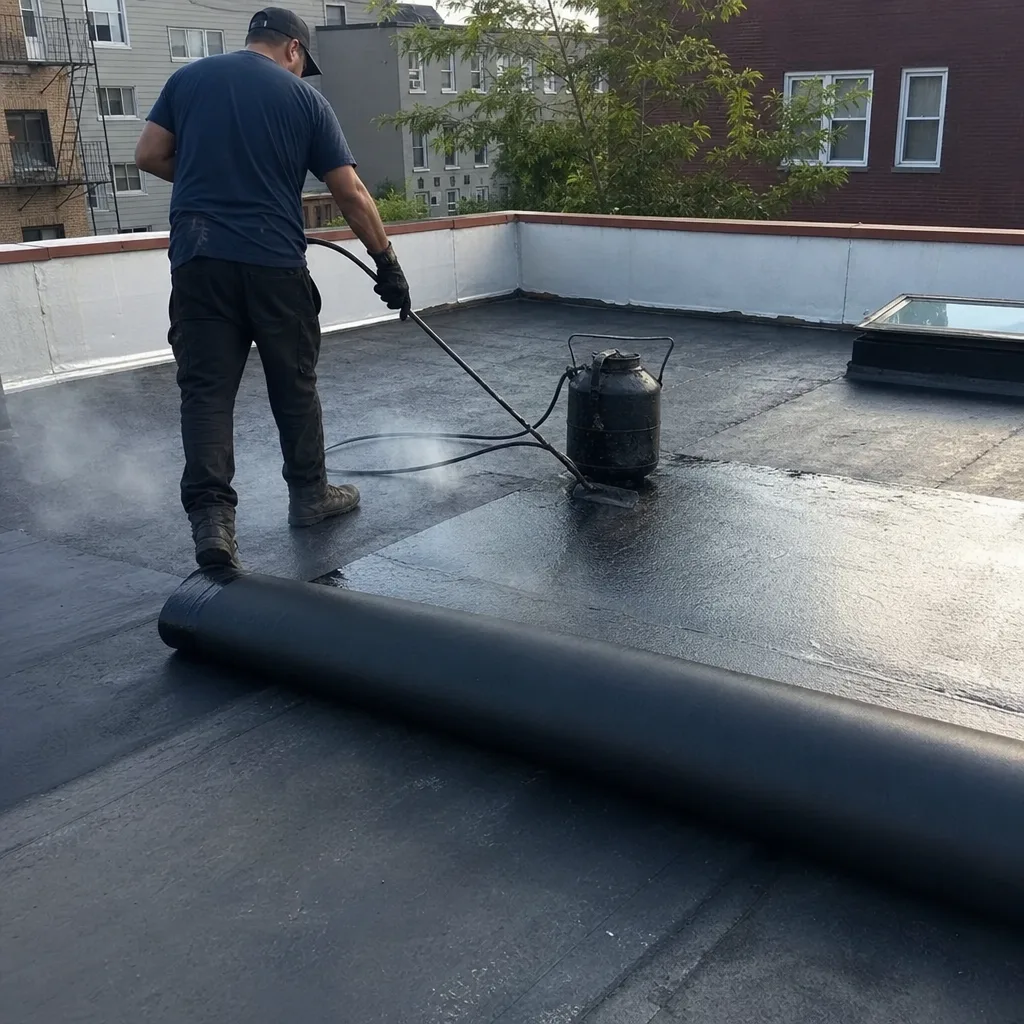
Metal roofing on Jackson Heights properties is typically limited to standing-seam installations on rowhouse bays, penthouse bulkheads, or decorative cornice elements on landmarked buildings. Where metal is appropriate, we install Atlas and IKO authorized systems with proper underlayment and thermal expansion joints. On LPC-designated structures, any visible metalwork must match historic profiles, and we coordinate with the commission’s material review to ensure compliance before fabrication begins.
Asphalt Shingles
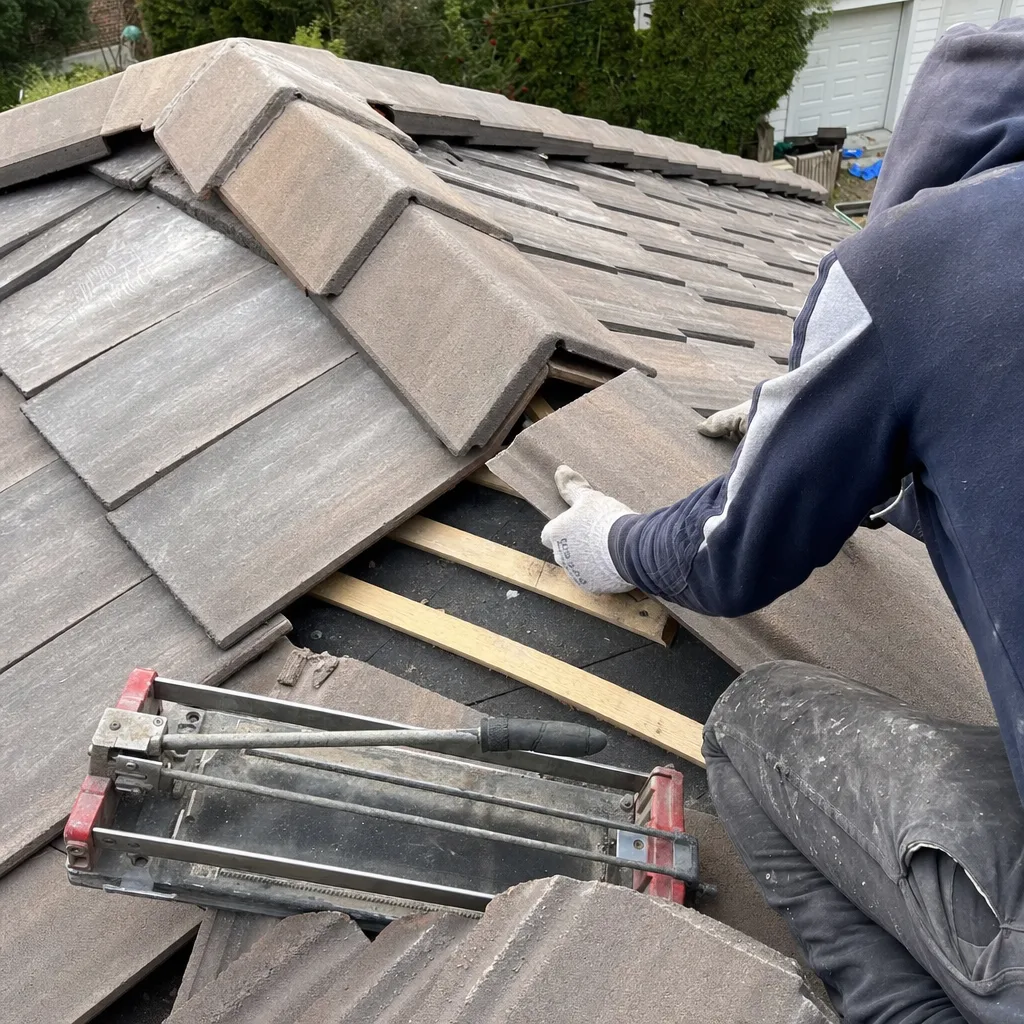
Asphalt shingles appear on some Jackson Heights rowhouses with pitched rear additions or on newer infill construction near Northern Boulevard. We install Owens Corning and CertainTeed architectural shingles with full ice-and-water shield given the neighborhood’s exposure to wind-driven rain and freeze-thaw cycling. For buildings within the historic district, shingle color and profile may require LPC review if visible from the street.
What happens when you call
- 1
A real person answersNo phone trees - you reach a local pro.
- 2
You get an upfront price rangeHonest numbers before anyone is dispatched.
- 3
A background-checked tech heads outLicensed & insured, dispatched right away.
- 4
You approve before work beginsNothing starts until you say go.
Trusted Brands We Service in Jackson Heights
We are authorized installers for GAF, CertainTeed, Owens Corning, IKO, Atlas, Tamko, and Boral, and we stock the modified-bitumen membranes, parapet coping stones, and flashings most commonly needed for Jackson Heights’s flat-roofed housing stock. Our supplier relationships mean we do not substitute materials mid-job; the GAF or CertainTeed system specified in your estimate is the system that goes on your roof. For Jackson Heights co-op boards managing tight maintenance budgets, this predictability matters. We also maintain inventory of the specific parapet repair components, through-wall flashings, and scupper boxes these pre-war buildings require, reducing wait times that can stretch projects for crews ordering from catalogs.
Common Roof Replacement & Installation Problems We See in Jackson Heights Homes
- Accumulated layers exceed load limits. Many Jackson Heights flat roofs carry three or more layers of built-up tar-and-gravel, modified bitumen, and old felts. The dead load approaches or exceeds what the original 1920s deck was designed to carry, causing subtle deflection that creates concealed ponding and accelerates membrane failure.
- Freeze-thaw cycles destroy parapet masonry. Queens’s hard winters crack mortar joints and coping stones, then meltwater infiltrates beneath membrane edges where it refreezes and lifts flashings. This is the dominant seasonal damage pattern on Jackson Heights buildings, and it repeats every winter until the parapet is rebuilt.
- Co-op board delays compound permit timelines. A single roofing contract requires board sign-off from resident shareholders, and LPC-designated buildings add 4-8 weeks for landmarks approval. Roofers unfamiliar with this process routinely promise timelines they cannot meet, leaving buildings exposed during the gap.
- Urban heat island stress shortens membrane life. Jackson Heights’s extreme density and minimal tree canopy over roof level create surface temperatures 20-30 degrees higher than less dense Queens neighborhoods. Older built-up membranes develop thermal cracks and alligatoring years sooner than their rated lifespan.
Pricing for Roof Replacement & Installation in Jackson Heights, NY
Roof replacement pricing in Jackson Heights reflects the neighborhood’s specific conditions: flat-roof complexity, parapet rebuilding, potential LPC approval costs, and the logistical challenges of working on occupied co-op buildings with limited material staging areas.
| Service | Typical Range in Jackson Heights |
|---|---|
| Flat roof tear-off and replacement, small co-op (1,500-2,500 sq ft) | $18,000-$28,000 |
| Flat roof tear-off and replacement, mid-size co-op (2,500-4,000 sq ft) | $28,000-$45,000 |
| Parapet rebuilding and coping replacement (per linear foot) | $85-$140 |
| LPC Certificate of No Effect application and filing | $2,500-$4,500 |
| Emergency tarping and temporary patching | $350-$850 |
| Seasonal inspection and maintenance plan | $89 per visit |
Factors that move these numbers: the number of existing layers requiring removal, deck condition and any plywood replacement, access constraints (narrow Jackson Heights alleys and shared driveways), and whether the building falls within the Jackson Heights Historic District. We provide no-hassle upfront pricing; the number on our estimate is the number on your invoice. Call (866) 756-1978 for a free, written estimate specific to your building.
We Also Serve Cities Near Jackson Heights
Our crews work throughout central Queens, including Jackson Heights and the surrounding communities of East Elmhurst, Elmhurst, Corona, and Woodside. Each neighborhood has its own building stock and regulatory environment; a flat roof in Corona faces different drainage challenges than a historic district co-op in Jackson Heights, and we adjust our approach accordingly. Wherever you are in this part of Queens, the same standards apply: live phone answering, photo-documented inspections, background-checked uniformed technicians, and the 90-Day Done Right Promise.
Serving Jackson Heights, NY - Our Local Coverage Area
We’re based in the Jackson Heights area and know this community well. Use the map below to see our service coverage - if you’re nearby, we can almost certainly help.
FAQs - Roof Replacement & Installation in Jackson Heights
Yes, if your building is within the Jackson Heights Historic District or individually landmarked, you need LPC approval before the NYC Department of Buildings will issue a roofing permit. This typically means obtaining a Certificate of No Effect, which confirms the proposed work will not alter the building’s protected exterior features; the process adds 4-8 weeks to project timelines. Ridgeline Roofing Co. prepares and files the LPC application as part of our standard service for landmarked buildings, and we present to co-op boards to explain the process. Call (866) 756-1978 to confirm whether your specific address falls within the historic district.
The dominant failure pattern is freeze-thaw damage to parapet masonry combined with accumulated membrane layers that exceed original deck capacity. Hard Queens winters crack mortar and coping joints; meltwater then infiltrates beneath multiple old felts where it refreezes and lifts flashings. Meanwhile, three or more layers of tar-and-gravel and modified bitumen add dead load that stresses the 1920s-1930s framing, causing deflection and concealed ponding. The urban heat island effect in this dense neighborhood accelerates thermal cracking of older membranes. These conditions are specific to Jackson Heights’s pre-war flat-roofed stock and do not occur in the same combination elsewhere in Queens.
Overlay is generally not advisable on Jackson Heights’s pre-war flat roofs and is often prohibited by co-op bylaws concerned with structural load. Most buildings in the neighborhood carry three or more layers of old felts, asphalt, and tar-and-gravel; adding another layer risks exceeding the original deck’s load capacity and conceals deteriorated substrate that should be addressed. A complete tear-off allows inspection of the deck, replacement of rotted sections, and proper installation of current membrane systems. We evaluate each building individually, but our recommendation in Jackson Heights is almost always full removal. Call (866) 756-1978 for a free inspection and honest assessment of your specific roof.
The physical work takes 3-5 working days for a typical 6-7 story co-op once permits are in hand. However, for LPC-designated buildings in the Jackson Heights Historic District, the total timeline from signed contract to final inspection is typically 8-12 weeks because landmarks approval must precede the DOB permit. Co-op board scheduling adds another variable; shareholder votes and superintendent coordination can extend or compress the schedule. We build realistic timelines into every Jackson Heights proposal and keep boards updated weekly during permit phases. If you need emergency protection during the wait, we offer temporary patching and tarping.
Modified-bitumen membranes, specifically torch-applied or self-adhering SBS systems from GAF and CertainTeed, perform best on Jackson Heights’s low-slope roofs. These materials flex with thermal expansion better than the old tar-and-gravel they replace, and they withstand the urban heat island stress that accelerates aging in this dense neighborhood. For parapet rebuilds, we use precast concrete or limestone coping stones matched to original profiles on landmarked buildings, with through-wall flashings and scuppers sized for the concentrated rainfall on flat surfaces. Every Jackson Heights job we spec includes full removal of old layers, not overlays, and rebuilt parapets as needed.
Written by Sal Benedetto, Owner at Ridgeline Roofing Co., serving Jackson Heights since 2016.