
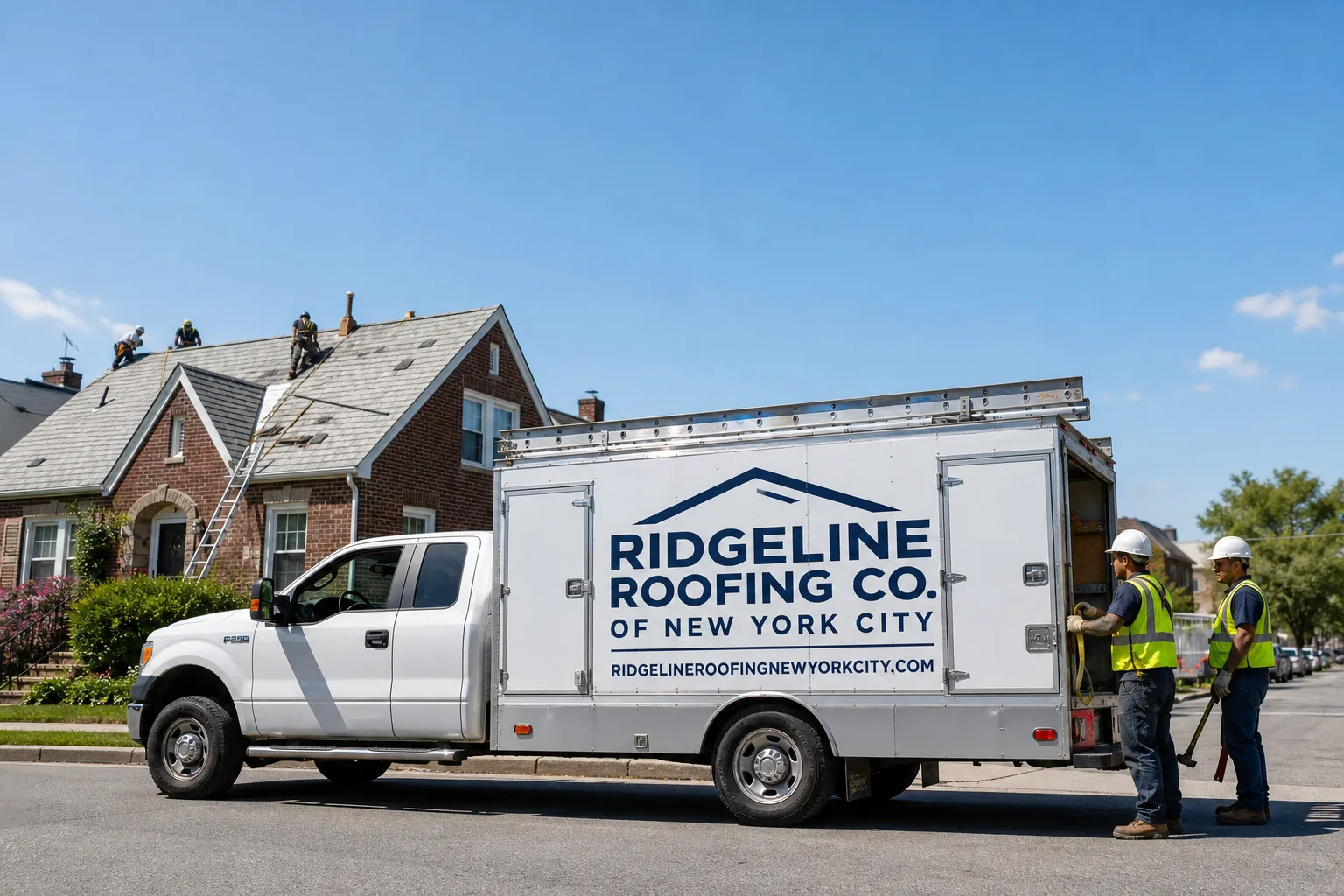
Fast, Reliable Specialty Roofing Across Sunnyside
Specialty roofing repair and replacement in Sunnyside typically costs $4,200-$14,500 depending on the system, and most flat-roof jobs on the neighborhood’s attached row houses are completed in one to two days. Our crews are on roofs in the 11104 zip code weekly - from the landmark district blocks between 43rd and 48th Streets to the walk-ups along Queens Boulevard - and we understand how a failure on one building cascades to its neighbors. If you’re seeing water stains, alligatored membrane, or ponding that won’t drain, call us at (866) 756-1978. A live person answers, day or night.
We’ve been climbing Sunnyside roofs since 2016. The neighborhood’s housing stock hasn’t changed much in that time - attached brick row houses and small apartment buildings, most built between 1920 and 1940, nearly all with flat or low-slope roofs. What has changed is the age of those original roof assemblies. Eighty to a hundred years of Queens freeze-thaw cycles, deferred maintenance, and well-meaning but uncoordinated repairs have left many buildings vulnerable. We know the local failure patterns because we’ve documented them, photographed them, and fixed them - one honest course at a time.
Why Ridgeline Roofing Co. of New York City Is Sunnyside’s Preferred Specialty Roofing Company
Our reputation in Sunnyside was built slowly, the way a good roof is: neighbor to neighbor, building to building. Homeowners here talk to each other - across shared courtyards, through building associations, at the Greenmarket on Skillman Avenue. When we repair a roof on 46th Street and the owner three doors down calls us the next spring, that’s the review that matters. We don’t chase storms; we chase the next season’s freeze-thaw cycle, and we’ve been doing it for over 42 years.
Response time to Sunnyside is typically under two hours for emergency calls. Our dispatch operates from Queens, not from some central office three boroughs away. That matters when a spring storm has overwhelmed an undersized internal drain and water is spreading across your top-floor ceiling. Our technicians are background-checked, uniformed, and trained to document every inspection with photos from your actual roof - not a scary speech in your driveway. The number on our estimate is the number on your invoice. A square deal: the price we quote is the price you pay.
Sal Benedetto, who leads Ridgeline Roofing Co., still reviews photos from every Sunnyside inspection personally. The 90-Day Done Right Promise applies here exactly as it does everywhere we work: if it’s not right, we come back and make it right. No paperwork, no arguing, no runaround.
Our Specialty Roofing Services in Sunnyside
Our Specialty Roofing team focuses on the flat and low-slope systems that dominate Sunnyside’s building stock. These are not residential shingle jobs; they require different materials, different installation methods, and a different understanding of how water moves across a surface it cannot shed quickly.
Modified Bitumen Roofing
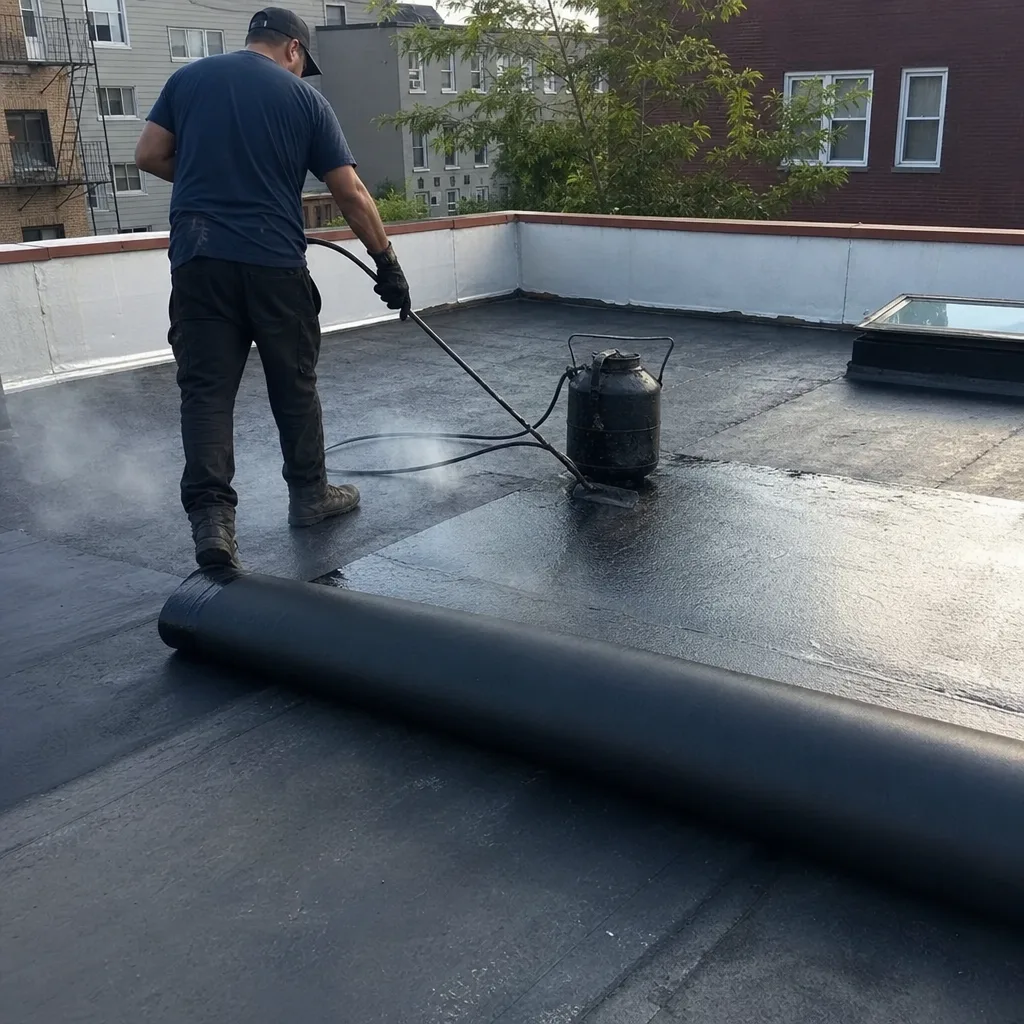
Modified bitumen is our most common recommendation for Sunnyside row house roof replacements. The material handles the thermal expansion and contraction of Queens’ 15-25 annual freeze-thaw cycles better than aging built-up roofing, and it can be installed directly over existing BUR in many cases - critical in landmark district buildings where LPC approval for full tear-off may be required. We use torch-applied and self-adhering systems from Atlas and Tamko, installed by journeymen who’ve trained apprentices on these exact roof types. A typical modified bitumen installation on a 1,200-square-foot Sunnyside row house roof runs $6,800-$11,500.
Built-Up Roofing (BUR)
Built-up roofing is what most of Sunnyside’s 1920s buildings were born with: alternating layers of asphalt and reinforcing fabric, finished with gravel or a smooth coating. When the surface is merely weathered but the substrate is sound, we can restore BUR with new flood coats, embedded fabric, and renewed flashings - extending service life 8-12 years at roughly half the cost of replacement. When alligatoring has progressed to cracking through multiple plies, or when ponding has saturated the insulation, replacement becomes the honest recommendation. BUR restoration in Sunnyside typically runs $3,800-$6,200; full replacement with new insulation and modified bitumen cap sheet runs $8,500-$14,500.
EPDM Roofing
EPDM - the black rubber membrane common on commercial buildings - performs well on Sunnyside’s larger walk-up apartment structures where a single continuous sheet minimizes seams. We install fully adhered and mechanically fastened systems from IKO, with proper termination bars at parapets and coordinated drain details. EPDM is particularly suited to buildings with rooftop HVAC equipment, as the membrane can be easily patched or modified when units are serviced or replaced. Expect $5,200-$9,800 for typical Sunnyside apartment building applications.
TPO Roofing
White TPO reflects summer heat, which matters on Sunnyside roofs where dark surfaces can reach 160°F in July. We install TPO on buildings where cooling costs are a priority and where the roof structure can handle the slightly different fastening pattern. TPO welding requires clean, dry conditions - we schedule these installations for spring and fall windows when Queens weather cooperates.
Green Roof Systems
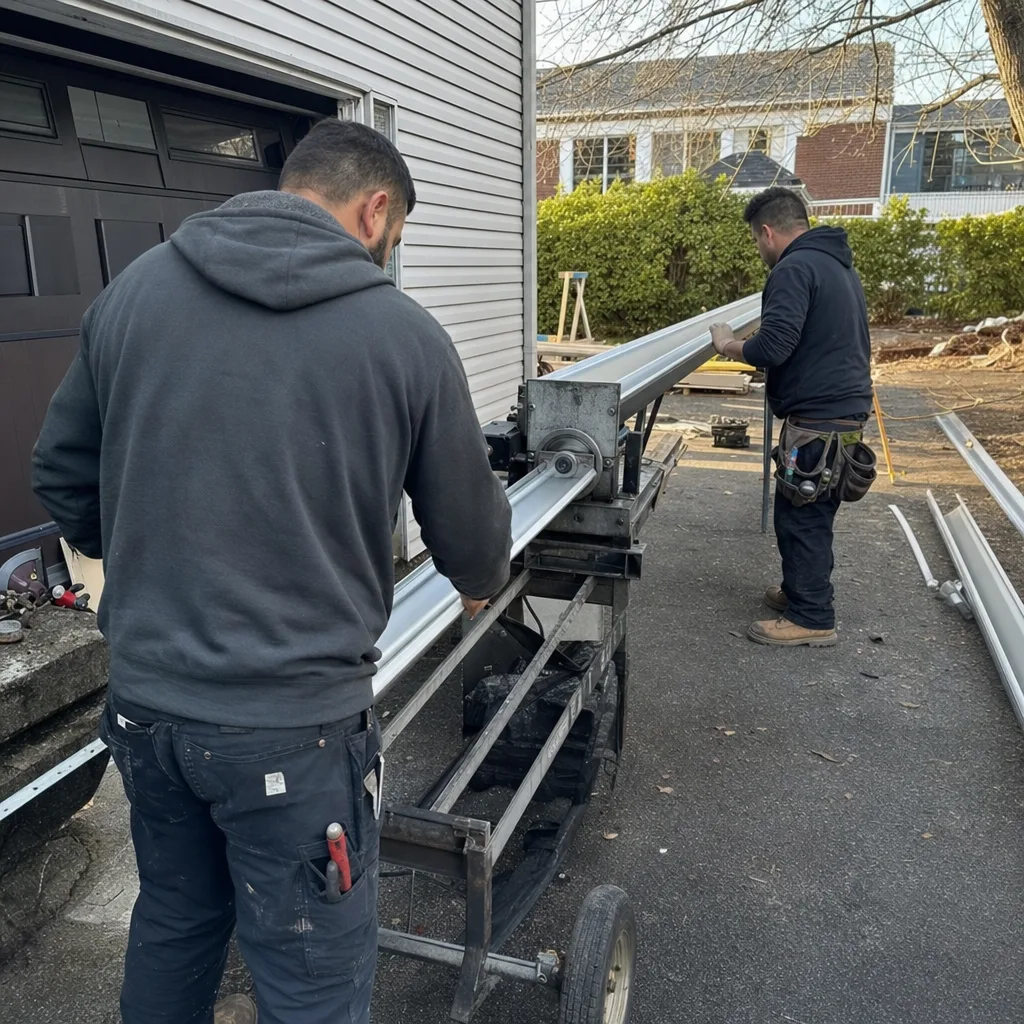
Green roofs are increasingly specified for Sunnyside buildings seeking stormwater credits or courtyard-facing amenity space. We install the waterproof membrane, root barrier, drainage layer, and growing medium - working with structural engineers to confirm load capacity on these 1920s structures, which were not originally designed for saturated soil weight. Every green roof we install in Sunnyside begins with a modified bitumen or EPDM base that we would trust on our own building.
Solar Ready Roofing
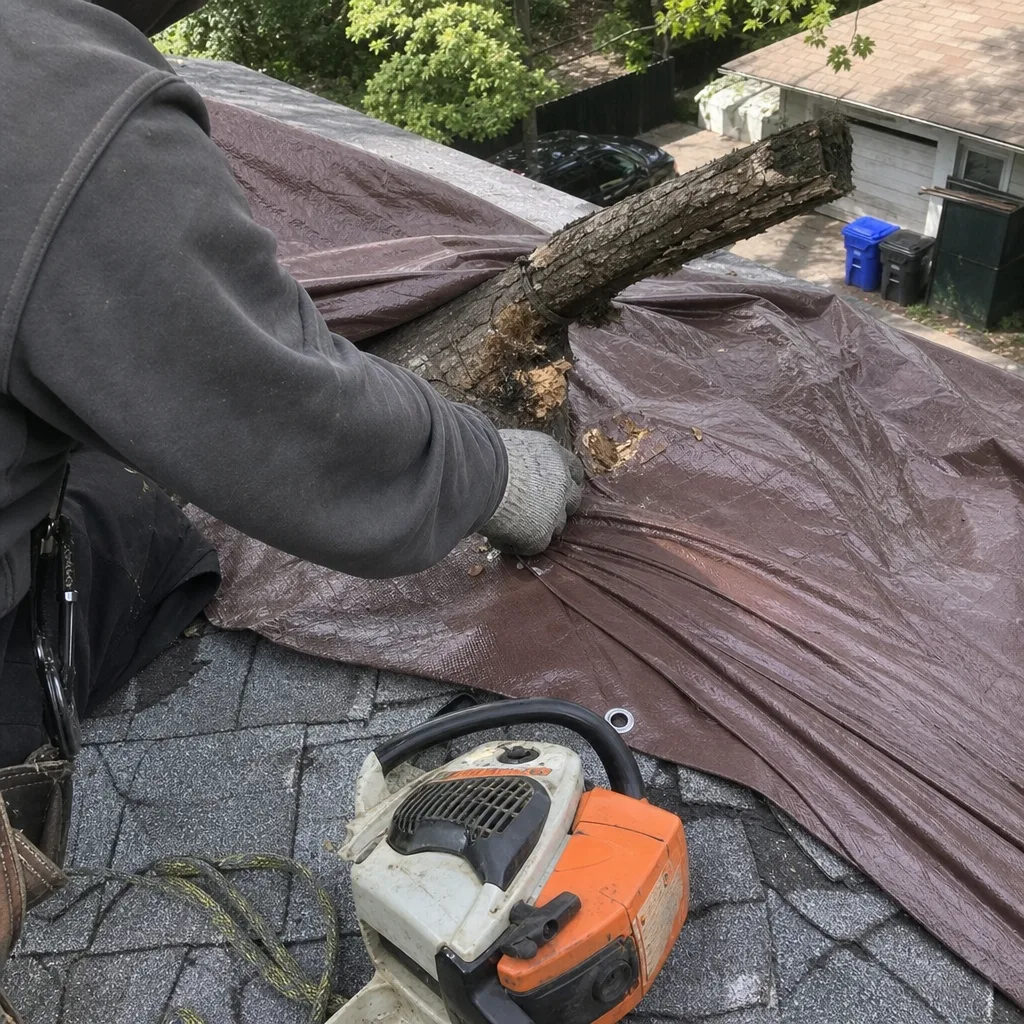
Solar panel installation on Sunnyside flat roofs requires a roof system designed for the additional penetrations, ballast loads, or attachment points. We install solar-ready modified bitumen and TPO systems with reinforced pitch pockets and pre-flashed attachment zones - so when your solar contractor arrives, they’re working with a roof built to outlast the panels.
What happens when you call
- 1
A real person answersNo phone trees - you reach a local pro.
- 2
You get an upfront price rangeHonest numbers before anyone is dispatched.
- 3
A background-checked tech heads outLicensed & insured, dispatched right away.
- 4
You approve before work beginsNothing starts until you say go.
Trusted Brands We Service in Sunnyside
We are authorized installers for GAF, CertainTeed, Owens Corning, IKO, Atlas, Tamko, and Boral - and we stock membrane, adhesive, and flashing components for Atlas, Tamko, and Boral systems at our Queens warehouse. That means no waiting two weeks for a roll of modified bitumen cap sheet when your roof is leaking into the bedroom. For Sunnyside’s older buildings, we also maintain relationships with specialty suppliers who still fabricate copper and lead-coated copper parapet caps, counterflashings, and custom scupper liners - the details that separate a roof that lasts from one that merely covers.
Common Specialty Roofing Problems We See in Sunnyside Homes
- Alligatoring on 80+-year-old built-up roofs. The surface cracks into a pattern resembling alligator hide, then progresses to full-depth fissures that admit water. We see this constantly on unrenovated row houses between Skillman Avenue and the LIRR tracks - original roofs that have simply exhausted their service life.
- Failed pitch pockets around penetrations. The original 1920s flashing compound around plumbing vents and HVAC lines dries, shrinks, and separates from the pipe, creating a direct water path. These are repairable if caught early; ignored, they destroy roof decks.
- Deteriorated parapet coping with water behind the facade. Freeze-thaw cycles lift coping stones, mortar joints fail, and water enters the wall cavity - showing up as plaster damage three floors down. Proper coping replacement with through-wall flashing stops this.
- Uncoordinated drain modifications in attached buildings. In Sunnyside Gardens row houses, the original 1920s internal roof drains tie into a shared courtyard drainage system. When a single owner caps or reroutes their drain without coordinating with neighbors, ponding and membrane failures cascade across the terrace - a pattern local roofers see repeatedly on the landmark-district blocks between 43rd and 48th Streets.
On a row house on 44th Street, we found a 90-year-old built-up roof with alligatored surface and a failed pitch pocket around a plumbing vent - the original internal drain had been capped by a neighbor, causing ponding that accelerated the failure. We installed a modified bitumen system over the existing BUR, added new parapet caps to prevent water entry behind the facade, and coordinated with the homeowner’s association to restore the courtyard drainage alignment.
Pricing for Specialty Roofing in Sunnyside, NY
| Service | Typical Range in Sunnyside | Notes |
|---|---|---|
| BUR restoration (flood coat, fabric, flashings) | $3,800 - $6,200 | For surfaces with minor alligatoring, sound substrate |
| Modified bitumen replacement (1,200 sq ft row house) | $6,800 - $11,500 | Includes insulation, parapet caps, drain detail |
| EPDM installation (apartment building) | $5,200 - $9,800 | Fully adhered or mechanically fastened |
| Green roof (extensive, 1,000 sq ft) | $14,500 - $22,000 | Membrane, drainage, 4″ growing medium, plantings |
| Emergency leak repair | $250 - $850 | Seasonal tune-up available at $89 |
What moves a job toward the higher end: full tear-off versus overlay, replacement of wet insulation, structural deck repairs, LPC filing and approval for landmark district work, and coordination with neighboring buildings for shared drainage. We provide no-hassle upfront pricing - the number on the estimate is the number on the invoice. Every Sunnyside homeowner receives a written, line-item proposal before work begins. Call (866) 756-1978 for your free estimate; most inspections are scheduled within 48 hours.
We Also Serve Cities Near Sunnyside
Our crews work throughout western Queens. If you’re in Sunnyside proper, Woodside, Long Island City, Astoria, or Maspeth, the same live-answer phone, same background-checked technicians, and same 90-Day Done Right Promise apply. We’ve replaced roofs on 47th Avenue buildings that technically sit in Woodside’s zip but walk to the 46th Street-Bliss Street station. Neighborhood boundaries blur; our standards don’t.
Serving Sunnyside, NY - Our Local Coverage Area
We’re based in the Sunnyside area and know this community well. Use the map below to see our service coverage - if you’re nearby, we can almost certainly help.
FAQs - Specialty Roofing in Sunnyside
Yes, if your building falls within the Sunnyside Gardens Historic District boundaries, visible roof alterations including membrane color, parapet height changes, or skylight additions require NYC Landmarks Preservation Commission review before work begins. The process typically adds 2-4 weeks to project scheduling but does not prevent replacement of failed roofing. We file the LPC application as part of our project management, including required photo documentation and material samples. Call (866) 756-1978 and we’ll confirm whether your specific address is within the district boundaries.
If the alligatoring is surface-level and the underlying felts are dry and intact, restoration with a new flood coat and embedded fabric can extend service life 8-12 years at roughly $3,800-$6,200. If cracks penetrate multiple plies, or if probing reveals wet insulation or rotted deck beneath, full replacement with a modified bitumen system is the honest recommendation - typically $6,800-$11,500 for a standard Sunnyside row house roof. We determine this during our photo-documented inspection, and we’ll show you exactly what we found. Estimates are free.
Modified bitumen is our standard recommendation for Sunnyside’s attached row houses. It accommodates thermal movement without the seam vulnerability of single-ply membranes, can be installed with minimal odor disturbance to neighbors, and interfaces cleanly with existing parapet and party-wall flashings. For buildings with rooftop equipment or future solar plans, we may recommend EPDM or a hybrid system. The “best” material is the one properly detailed for your specific drainage, your neighbors’ roof conditions, and your building’s structural capacity - which we assess before recommending.
Queens experiences 15-25 freeze-thaw cycles per winter. Water that ponds on flat roofs - common where interior drains are undersized or clogged - expands roughly 9% when it freezes, splitting membranes and opening seams. A roof designed for 20 years may fail in 12 if drainage is poor. In Sunnyside, where many original 1920s drains are now handling additional loads from rooftop HVAC or have been modified by neighbors, this accelerated failure is the pattern we see most. Proper drainage coordination and timely membrane replacement are the defenses.
Yes, and in Sunnyside Gardens it’s a recurring problem. The original 1920s internal drains were designed as a unified courtyard system; when one owner caps or reroutes their drain without coordinating, water that previously drained through their roof now must find alternative paths - often across your roof, through your drains, or into ponding that accelerates your membrane failure. We’ve resolved this repeatedly by working with homeowner associations to restore proper drainage alignment, sometimes installing supplemental drains or scuppers where the original system cannot be fully restored. If you’re seeing ponding that correlates with a neighbor’s recent work, call (866) 756-1978 - we’ll inspect, document, and help coordinate a solution.
Written by Sal Benedetto, Owner at Ridgeline Roofing Co., serving Sunnyside and New York City since 2016.