
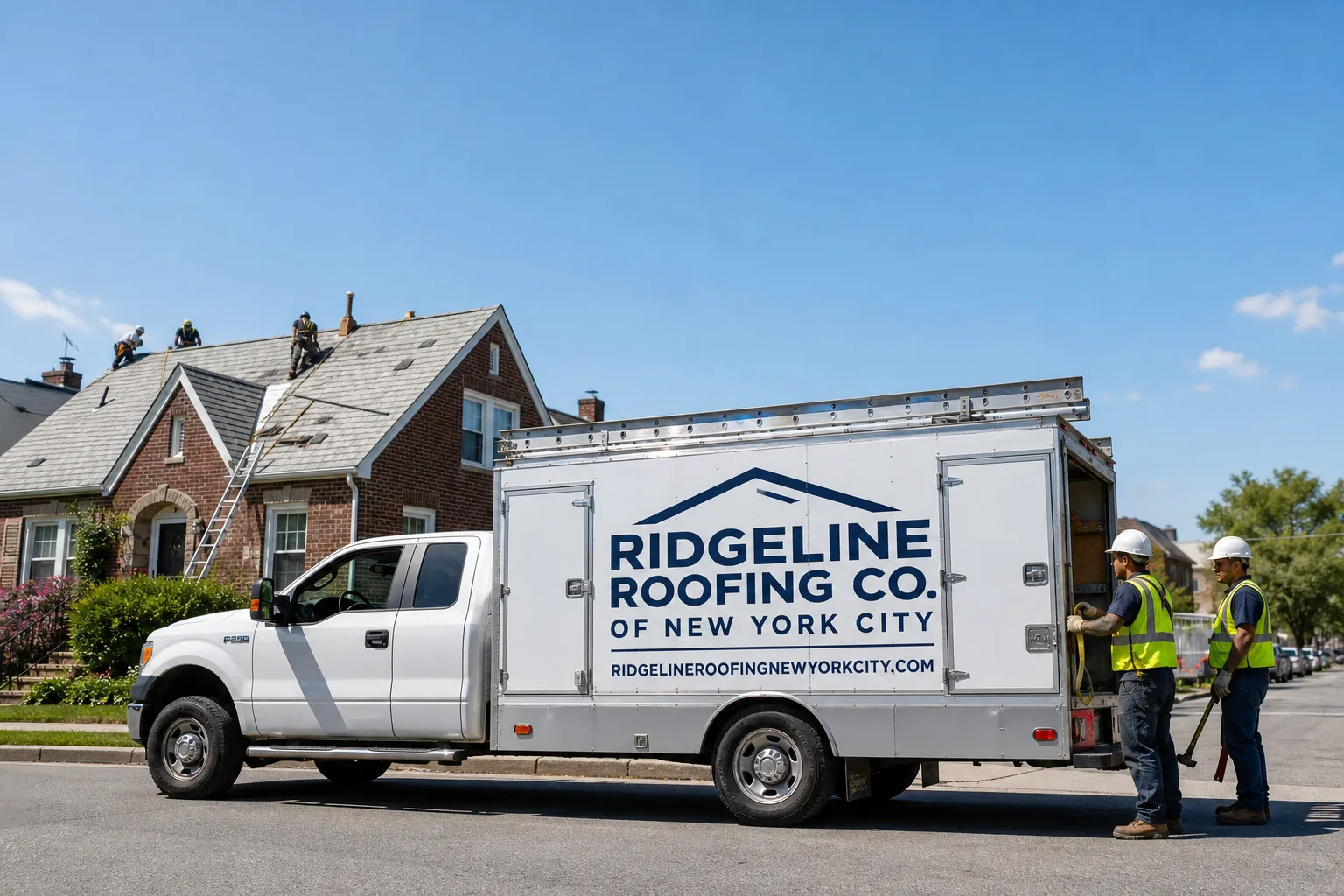
Fast, Reliable Emergency & Storm Damage Across Chinatown
When wind-driven rain finds its way through a failed roof penetration on a Mott Street tenement, you need a crew that knows how to work Chinatown’s streets, not just its zip code. We’re Ridgeline Roofing Co., and we’ve been answering emergency calls in Lower Manhattan since 2016. A live person picks up our phones 24 hours a day, including the middle of a storm, and our background-checked technicians can usually reach a Chinatown address within 45 minutes to an hour. We understand the access constraints on streets like Doyers and the Canal Street corridor, where boom trucks don’t fit and rope-and-pulley staging is the only practical way to get materials to your roof. Call us at (866) 756-1978 for emergency tarping, storm damage assessment, or help starting your insurance claim.
Why Ridgeline Roofing Co. of New York City Is Chinatown’s Preferred Emergency & Storm Damage Company
We’ve worked on the flat roofs of Chinatown’s Old Law and New Law tenements for over four decades. The 5-7 story brick masonry buildings that define this neighborhood, many built between 1890 and 1930, have specific failure patterns we’ve learned to read: deteriorated parapet copings, multi-layer built-up roofing that hides previous patches, and the unique damage caused by commercial kitchen exhaust venting through densely packed roof penetrations. Our technicians document every inspection with photos taken from your actual roof, not the sidewalk below, and we arrive in uniform with background checks completed.
Our reputation in Chinatown rests on one principle: we do the job right, and if it’s not right, we come back and make it right. That’s our written 90-Day Done Right Promise, no paperwork runaround, no arguing. We hire local crews and train apprentices into journeymen. We’re not storm chasers who blow into town after a nor’easter and vanish before the check clears. We’ve been here for 42 years, and we plan to be here in thirty more.
Response time matters in an emergency. Our dispatchers know that Canal Street traffic moves differently at 6 PM than at 2 AM, and they route our crews accordingly. Most emergency tarping and temporary weatherproofing in the 10013 ZIP is completed in a single visit, with upfront pricing that means the number on the estimate is the number on the invoice.
Our Emergency & Storm Damage Services in Chinatown
Storm Damage Repair
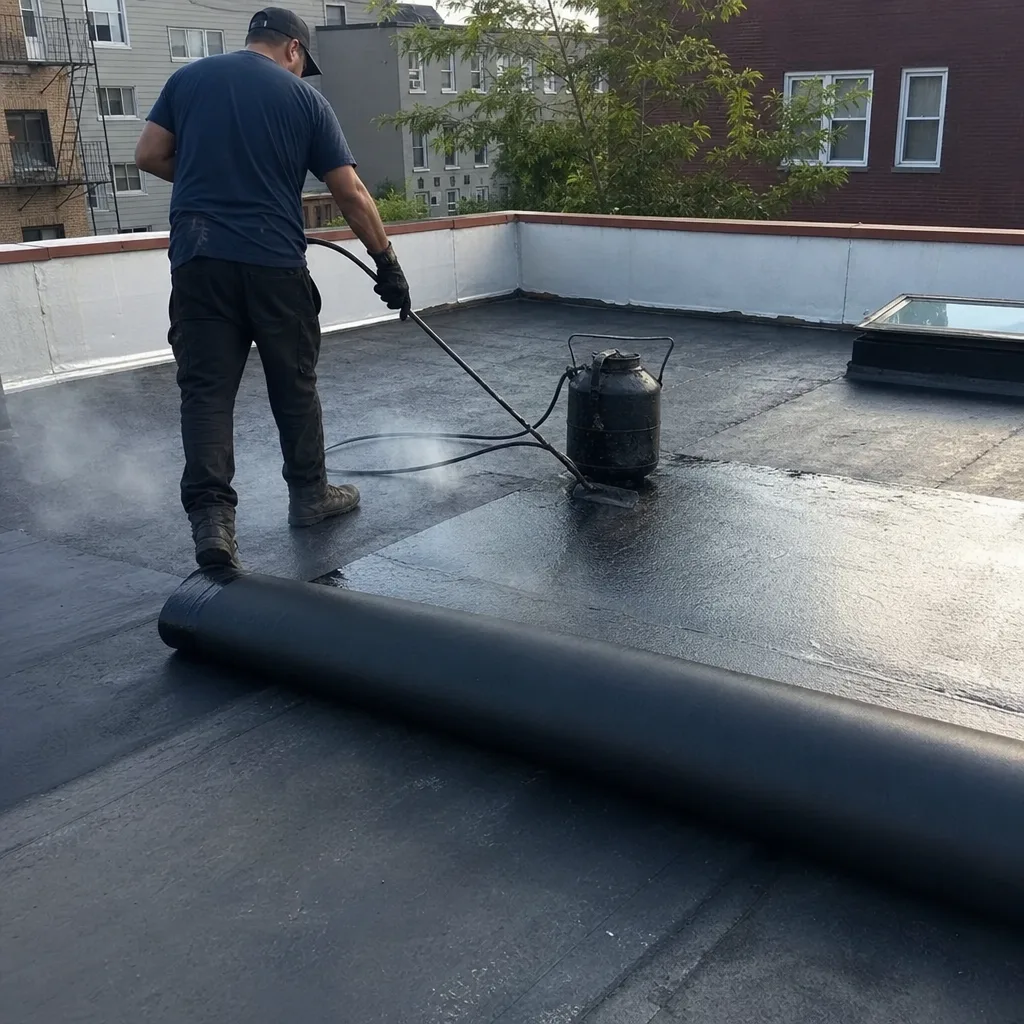
Chinatown’s tightly packed canyon streets create an acute urban heat-island effect that accelerates thermal cycling on dark flat-roof membranes. Winter freeze-thaw cycles stress already-cracked brick parapet copings and the flashings tied into them. After a nor’easter, we responded to a five-story tenement on Doyers Street where grease-laden exhaust from the dim sum kitchen below had eaten through the pitch pocket around a plumbing vent, letting wind-driven rain cascade into the top-floor unit. We used GAF Liberty SBS cap sheet to patch the membrane and installed a double-caulked lead boot, all staged via rope-and-pulley gin wheel because no boom truck fits on that block. We repair wind-lifted membrane, hail-cracked cap sheets, and torn flashings on the tenement roofs that dominate this neighborhood.
Emergency Tarp
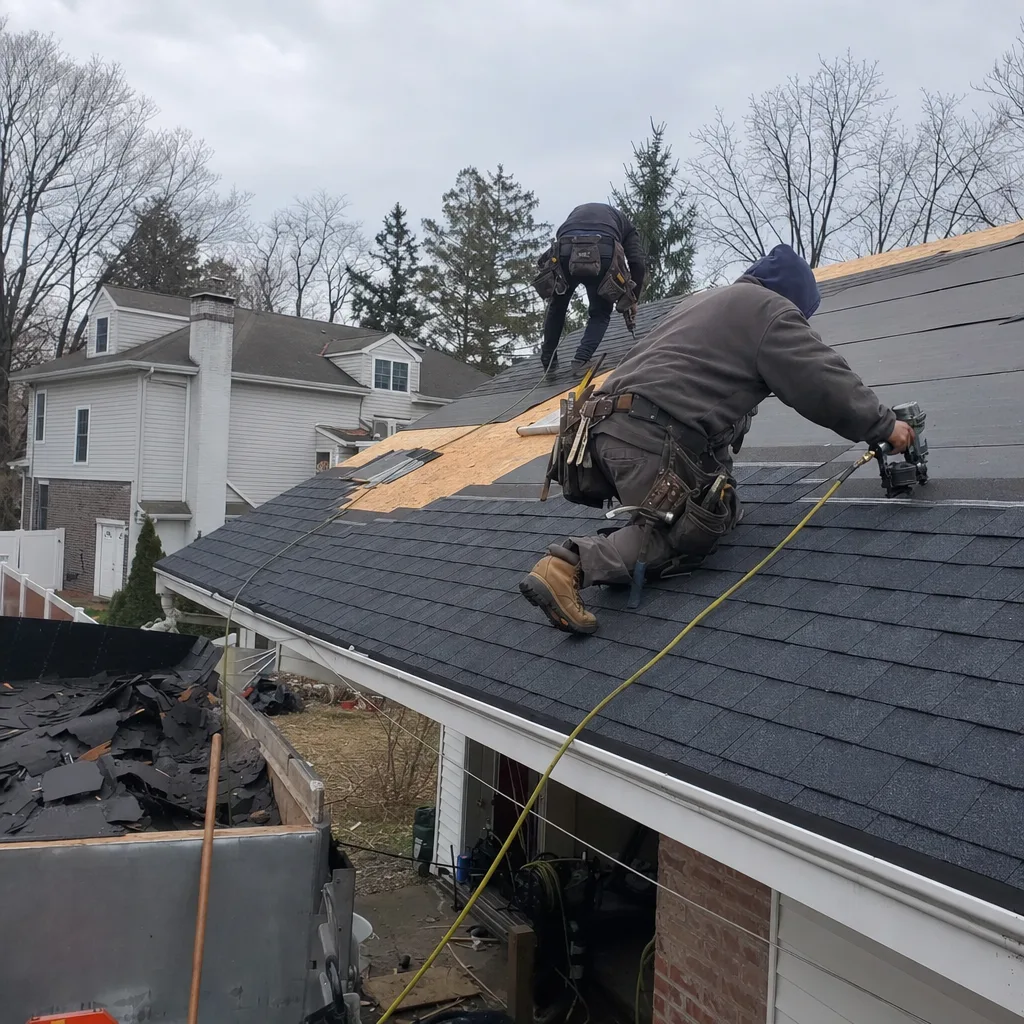
When water is actively entering your building, speed beats everything. Our emergency tarp service in Chinatown is built for the access realities of the neighborhood. We carry reinforced polyethylene sheeting and mechanical fastening systems that work on multi-layer built-up roofs where adhesive bonding alone won’t hold. On streets where crane access is impossible, our crews use gin wheels hung from parapet edges or internal freight-elevator staging to get materials aloft. We secure tarps around existing penetrations without creating new damage, and we document the temporary installation with photos for your insurance carrier. Same-day response is standard for active leaks in the 10013 ZIP.
Insurance Claims
Storm damage claims on Chinatown tenements require documentation that accounts for the building’s specific conditions: the age of the roofing system, the number of accumulated layers, pre-existing grease-exhaust degradation around penetrations, and the specialized staging methods required for access. We provide photo-documented inspections, written scope-of-work narratives, and direct communication with adjusters. Our estimates distinguish between storm-caused damage and long-term wear, which matters for coverage determinations. We work with carriers regularly and understand what documentation speeds approval. If your adjuster has questions about rope-and-pulley staging costs or water-tower platform repairs, we explain the building-specific requirements that drive those line items.
Wind Damage
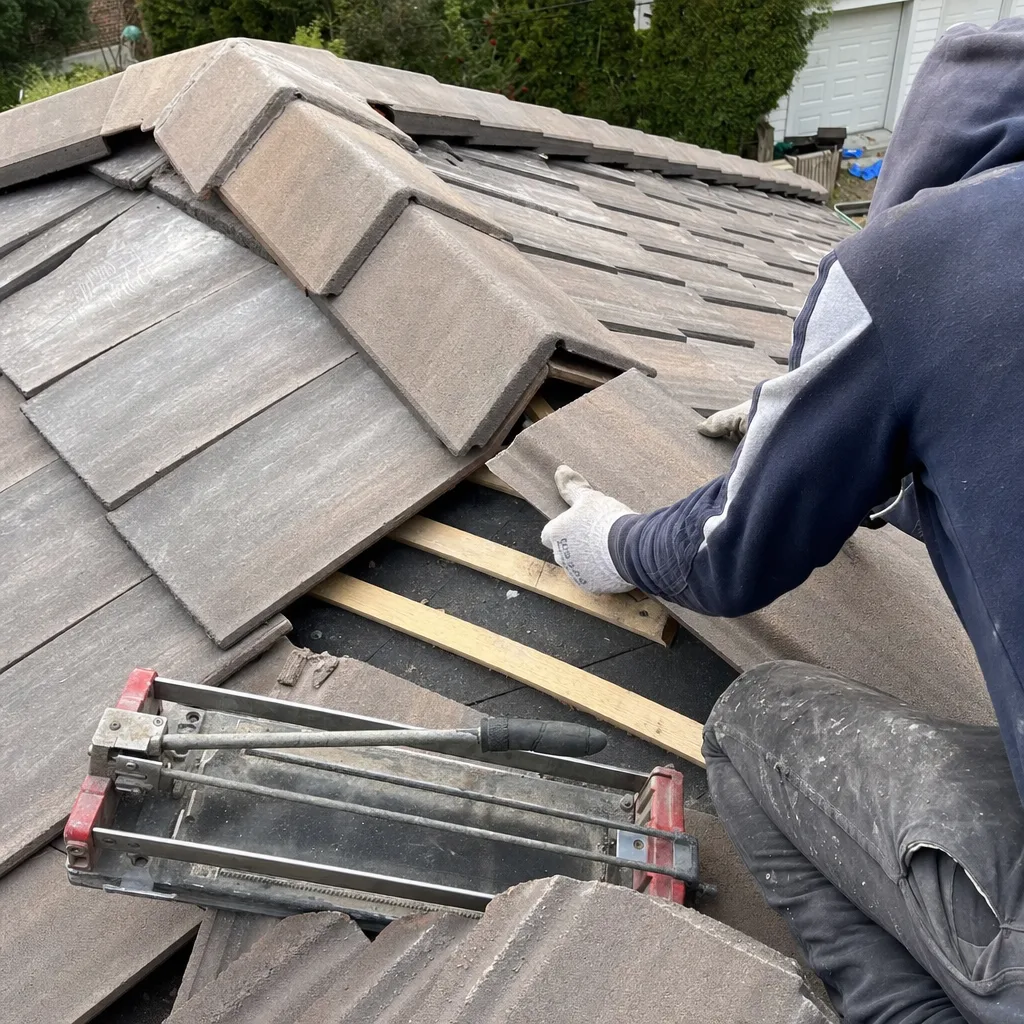
Proximity to the East River makes wind-driven rain a recurring infiltration vector on east-facing elevations in Chinatown. Wind can lift membrane edges at parapet walls, tear flashings that were already stressed by thermal cycling, and drive water through gaps that stay dry in ordinary rain. We inspect for wind damage systematically: membrane field, perimeter flashings, penetration seals, and drainage points. On tenement roofs with multiple roofing layers, wind uplift can separate plies that appeared sound. We repair what can be repaired and document what requires broader scope for insurance purposes.
What happens when you call
- 1
A real person answersNo phone trees - you reach a local pro.
- 2
You get an upfront price rangeHonest numbers before anyone is dispatched.
- 3
A background-checked tech heads outLicensed & insured, dispatched right away.
- 4
You approve before work beginsNothing starts until you say go.
Trusted Brands We Service in Chinatown
We are authorized installers for seven manufacturer lines, and for emergency repairs in Chinatown we regularly stock GAF Liberty SBS modified bitumen cap sheet, CertainTeed Flintlastic SA, and Owens Corning WeatherLock flexible leak barrier. These materials bond reliably to the multi-layer built-up and torch-down modified bitumen roofs common on local tenements. We don’t substitute unspecified materials when your roof is open to the weather. Our inventory is held locally, so we can match existing membrane types without the delays that come from special-ordering. When you’re staring at a bucket under a ceiling stain, that turnaround matters.
Common Emergency & Storm Damage Problems We See in Chinatown Homes
- Pitch-pocket failures from commercial kitchen grease exhaust. The dense concentration of ground-floor and basement commercial kitchens in Chinatown’s 10013 ZIP means grease-laden steam vents directly through roofs at a rate far higher than in primarily residential buildings. This exhaust accelerates membrane and flashing degradation around penetrations, making penetration-seal and pitch-pocket failures the dominant roofing problem in the neighborhood rather than field-membrane wear.
- Water-tower platform collapse or misalignment during storms. Old water-tower platforms on these tenement roofs add live-load complexity. When storms shift or crack weak platforms, the resulting stress can fracture parapet walls and tear the flashings tied into them, creating sudden, large-scale infiltration paths.
- Parapet coping deterioration accelerated by freeze-thaw cycling. Chinatown’s brick parapet walls, many dating to the 1920s or earlier, have copings that crack and spall under winter freeze-thaw stress. Once the coping fails, water enters the wall cavity, freezes, expands, and pushes flashings away from the wall, compounding the leak.
- Staging delays from inexperienced contractors attempting boom-truck access. Streets like Mott and the Canal Street corridor are so congested and narrow that crane or boom-truck access is effectively impossible on most blocks. Out-of-area roofers who underbid these jobs without accounting for gin-wheel or freight-elevator staging lose time on the job, blow budgets, and leave homeowners waiting while they figure out what local crews already know.
Pricing for Emergency & Storm Damage in Chinatown, NY
Honest pricing starts with honest scope. Here’s what emergency and storm damage work typically runs in the Chinatown market:
| Service | Typical Range in Chinatown |
|---|---|
| Emergency tarp (temporary weatherproofing) | $350-$650 |
| Storm damage repair, minor (single penetration patch, flashing repair) | $450-$950 |
| Storm damage repair, moderate (multiple penetrations, parapet coping, membrane patch up to 100 sq ft) | $1,200-$2,800 |
| Water-tower platform stabilization or repair | $1,800-$4,500 |
| Insurance claim documentation and adjuster meeting | No charge with approved repair |
Three factors push costs higher in Chinatown specifically: rope-and-pulley or freight-elevator staging adds labor hours that boom-truck access avoids; grease-exhaust degradation often means penetration repairs require more extensive sealant removal and substrate prep than standard flashing work; and multi-layer roofs may need partial rip-off to achieve proper adhesion for patches. We quote upfront, before work begins, and the number we give is the number on the invoice. Estimates are free. Call (866) 756-1978 for an exact quote on your specific situation.
We Also Serve Cities Near Chinatown
Our emergency response radius covers all of Lower Manhattan and beyond. We regularly dispatch to the Chinatown core, the broader Financial District, the East Village, and throughout Manhattan. If you’re searching for Emergency & Storm Damage help from a company that knows New York City’s building stock and permitting landscape, we’re already nearby.
Serving Chinatown, NY - Our Local Coverage Area
We’re based in the Chinatown area and know this community well. Use the map below to see our service coverage - if you’re nearby, we can almost certainly help.
FAQs - Emergency & Storm Damage in Chinatown
We replace the failed boot and reseal the penetration properly; a tarp alone won’t stop grease-laden steam from continuing to degrade the surrounding membrane. Our crew removes the damaged pitch pocket or lead boot, cleans the substrate of accumulated grease residue, and installs a new double-caulked lead boot or preformed pitch pan with compatible sealant. On a tenement roof in Chinatown, this is standard practice, not an upsell. Call (866) 756-1978 for a free inspection and exact quote.
Yes. Same-day emergency tarping is standard throughout the 10013 ZIP, including streets like Doyers and Mott where boom trucks don’t fit. Our crews carry gin wheels and rigging equipment specifically for these conditions, and our dispatchers route based on actual street access, not just GPS distance. We’ve tarped roofs on the Canal Street corridor at 11 PM on a Saturday. The staging method changes; the response time doesn’t.
Most policies cover reasonable and necessary access costs to complete covered repairs, and we document rope-and-pulley or freight-elevator staging as a required line item with photos showing why boom-truck access is impossible on your specific block. We’ve had adjusters approve these costs when the documentation clearly ties the staging method to the building’s location and physical constraints. We communicate directly with carriers and explain Chinatown’s access realities in language adjusters understand. Call us before you file, and we’ll review your policy’s coverage language with you.
Yes, we stabilize and repair water-tower platforms that have shifted, cracked, or overloaded weak parapet walls during storms. This work requires accounting for live-load distribution and the condition of the underlying masonry, which we assess during our photo-documented inspection. Platform repair is often coordinated with flashing replacement where the platform ties into the roof membrane. We evaluate whether the platform can be safely repaired or if structural engineering review is warranted, and we document everything for insurance purposes.
We can often perform a partial rip-off limited to the storm-damaged area, removing only the layers necessary to achieve proper adhesion for the patch. On Chinatown tenements with decades of accumulated built-up roofing or modified bitumen, full replacement is rarely required for emergency repairs. Our technician will expose the substrate, assess what’s beneath, and recommend the minimum scope that resolves the leak and meets manufacturer specifications for the repair material. You’ll get upfront pricing for both the targeted repair and, if you want to know, what broader replacement would cost. No pressure either way.
Written by Sal Benedetto, Owner at Ridgeline Roofing Co., serving Chinatown and New York City since 2016.