
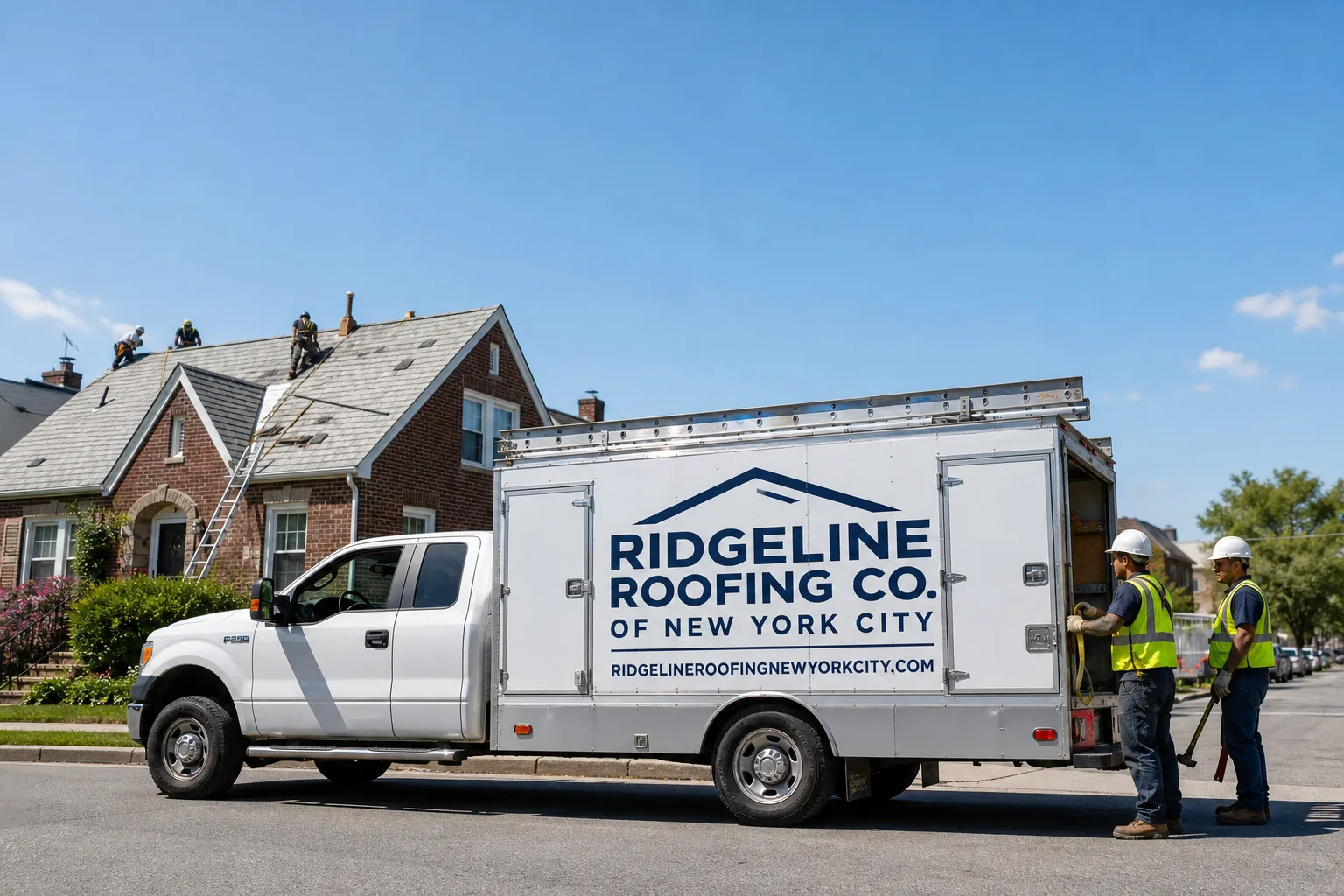
Fast, Reliable Emergency & Storm Damage Across Corona
When a February nor’easter drives horizontal rain against your parapet wall, or ice clogs the interior drain on your flat roof and water starts pooling above your ceiling, you need someone who knows Corona’s row houses, not a contractor reading Queens off a map. We’ve been answering live calls around the clock since 2016, and our crews are on Corona streets - from Roosevelt Avenue down to the Grand Central Parkway - usually within the hour when storm damage is active. A live person picks up at (866) 756-1978, day or night, because we know water doesn’t wait for business hours in a 1920s brick row house with shared walls.
Our Emergency & Storm Damage team has handled hundreds of calls in the 11368 zip and surrounding blocks. We understand that in Corona’s dense housing stock, one failed flashing joint can affect two families before anyone sees a stain on the ceiling.
Why Ridgeline Roofing Co. of New York City Is Corona’s Preferred Emergency & Storm Damage Company
We’ve been serving Queens homeowners since 2016 - over 42 years of standing behind local roofs, not chasing storms. That longevity matters in Corona, where the building stock is specific and the permit environment is unforgiving. We’re not a crew that rolled in from Pennsylvania with a magnet sign; we’re New York City contractors who hire local apprentices and plan to be here in thirty years.
Our reputation in Corona is built on showing up when we say we will and fixing what we find - not inventing work. The 90-Day Done Right Promise means if it’s not right, we come back and make it right. No paperwork gauntlet, no argument. Background-checked, uniformed technicians document every inspection with photos from your actual roof, not a scare story in the driveway.
Response time to Corona is typically under an hour for active leaks and storm damage during weather events. We know the local streets, the parking realities, and the NYC Department of Buildings requirements that out-of-town contractors routinely underestimate. When you’re trying to stop water from entering a top-floor unit at 11 PM, that local knowledge saves hours.
Our Emergency & Storm Damage Services in Corona
Storm Damage Repair
Corona’s flat-roof row houses fail differently than pitched-roof homes. The most common storm damage we see isn’t torn shingles - it’s parapet wall coping mortar cracked by freeze-thaw cycling, letting storm-driven rain enter directly above the top-floor ceiling. We repair these failures with proper counter-flashing, fluid-applied polyurethane sealants at coping joints, and membrane patches where the old built-up or modified-bitumen system has split from ponding water. During a February nor’easter, we responded to a 1930s row house on 108th Street where high winds had lifted the copper counter-flashing on the parapet. The old built-up membrane was sound, but the separated flashing let snowmelt run behind the parapet wall, soaking two top-floor units. We installed new GAF Liberty flashings and sealed the coping joints with a fluid-applied polyurethane - no tarp needed, and the owner avoided a full roof replacement.
Emergency Tarp
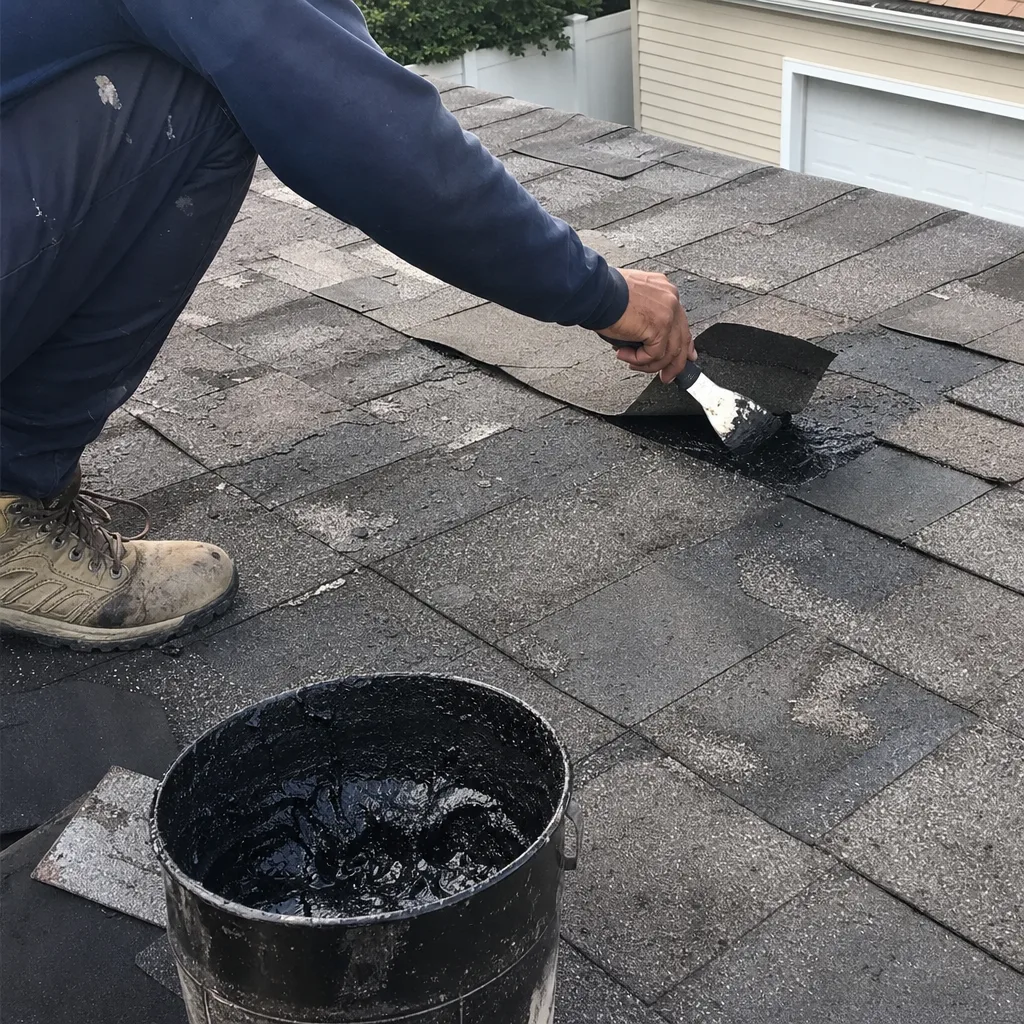
For pitched roofs, tarps are standard. For Corona’s flat roofs, they’re often the wrong tool. A tarp on a flat roof traps condensation and can accelerate membrane degradation. When we can access the parapet safely during a storm event, we prefer temporary sealant applications or weighted membrane patches that shed water properly. If a tarp is truly necessary - say, tree damage has opened a large section - we use breathable, reinforced materials secured without penetrating the existing membrane, and we return to remove it within 48 hours. The goal is stopping water without creating a bigger problem.
Insurance Claims
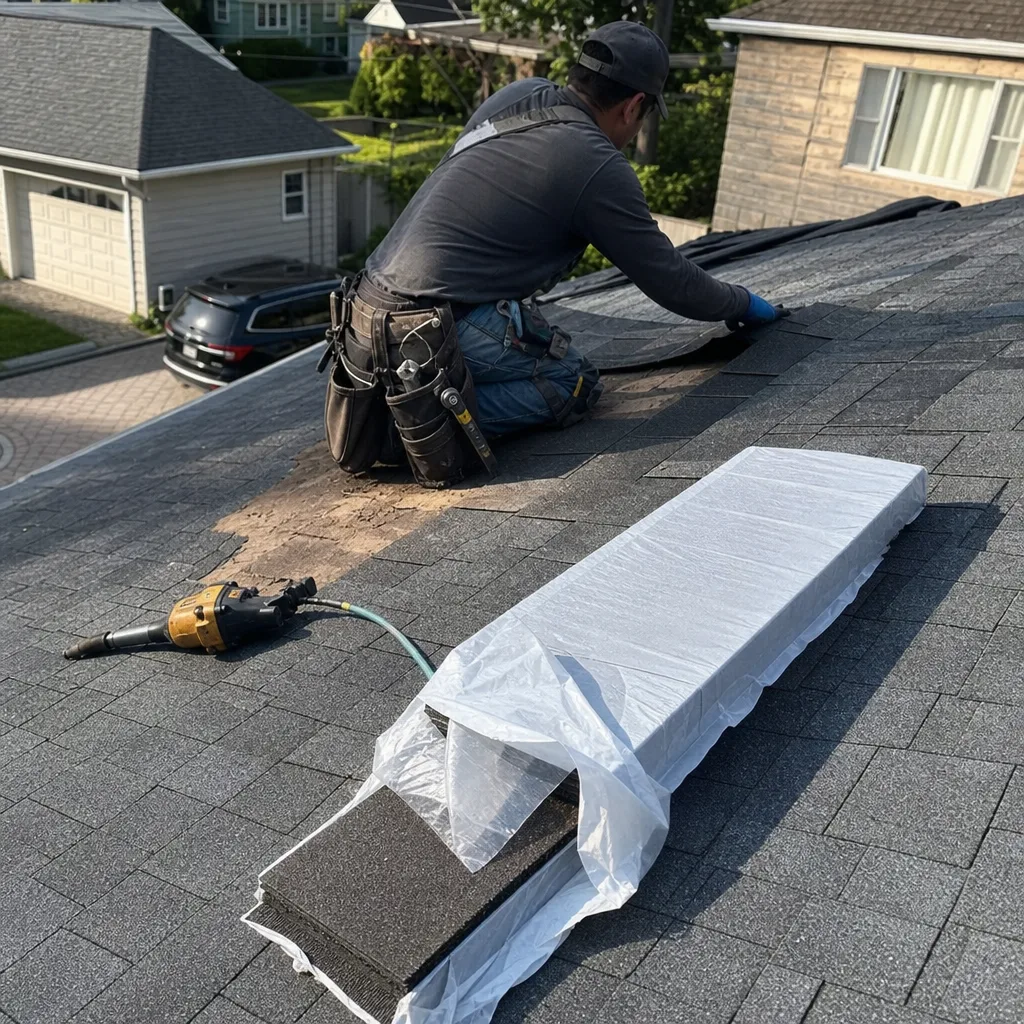
We document everything. Photos from the roof, photos of the interior damage, dated notes on weather conditions, and a written scope of work with line-item pricing. Insurance adjusters in Queens know our reports; we’ve worked with carriers on Corona claims for decades. We don’t inflate scopes, and we don’t let carriers skip legitimate damage. If your policy covers the loss, we’ll help you get what you’re owed. If it doesn’t, we’ll tell you straight and price the repair so you can decide.
Wind Damage
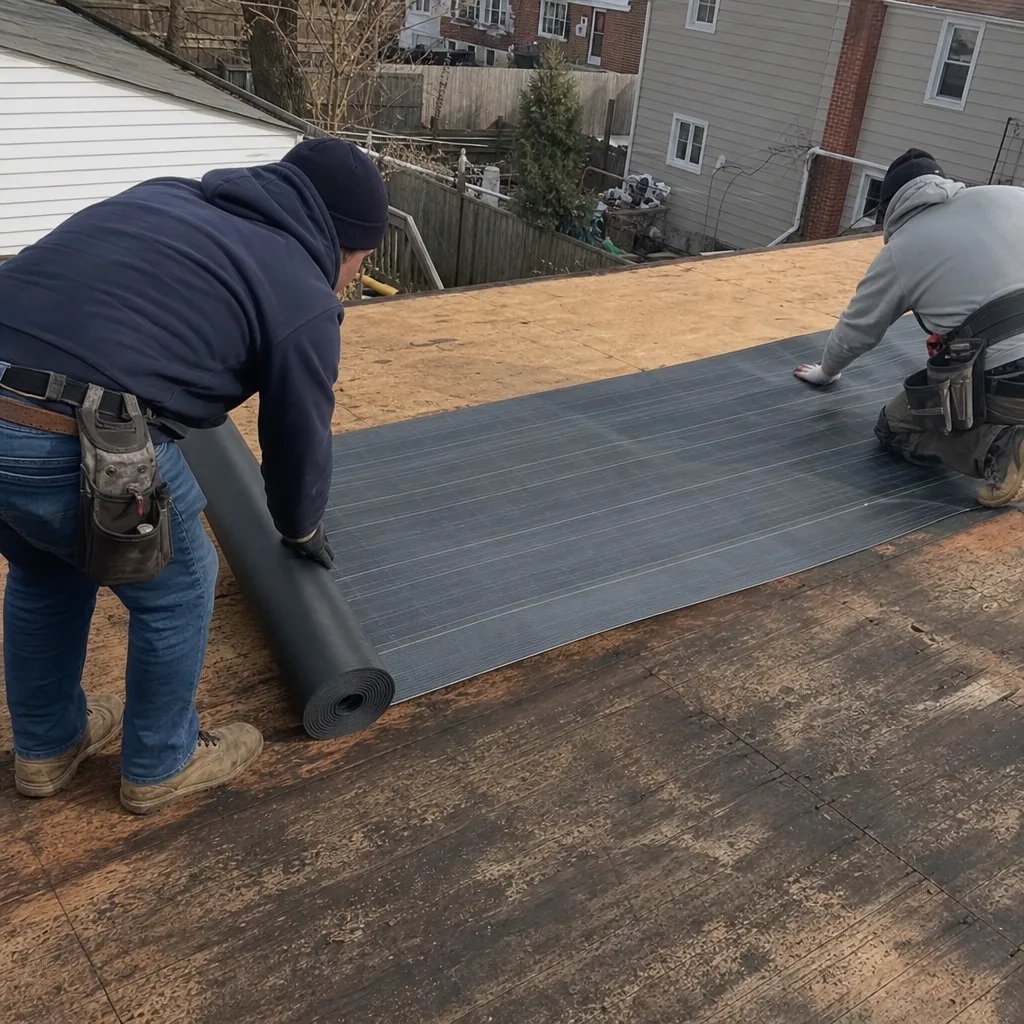
High winds in Corona don’t tear off shingles - they lift coping stones, separate counter-flashing from brick parapets, and drive rain through aging membrane seams. The 1970s and 1980s modified-bitumen membranes common in Corona’s housing stock develop alligatoring and pinhole leaks that become full ruptures under wind-driven pressure. We inspect the field membrane, the seams, the flashings, and the parapet in one systematic pass, because fixing the membrane while missing the flashing is a callback we don’t make.
What happens when you call
- 1
A real person answersNo phone trees - you reach a local pro.
- 2
You get an upfront price rangeHonest numbers before anyone is dispatched.
- 3
A background-checked tech heads outLicensed & insured, dispatched right away.
- 4
You approve before work beginsNothing starts until you say go.
Trusted Brands We Service in Corona
We install and repair with materials from manufacturers we trust: CertainTeed’s modified-bitumen systems for durable flat-roof recovery, Owens Corning weatherproofing accessories for parapet detailing, and IKO’s cold-application membranes where torch-down isn’t practical. We stock common flashing profiles, membrane rolls, and sealants for Corona’s building stock, which means faster turnaround when you’re trying to stop a leak before the next storm. No substitutions, no “equivalent” materials you didn’t approve. Authorized installation means the warranty counts.
Common Emergency & Storm Damage Problems We See in Corona Homes
- Parapet coping mortar cracks during freeze-thaw cycles. The brick expands and contracts differently than the roof membrane, cracking coping mortar and lifting counter-flashing. Storm-driven rain enters behind the parapet and runs down inside the wall, often soaking two attached units before it shows on the ceiling. This failure mode is invisible from the street and routinely misdiagnosed by contractors unfamiliar with Corona’s row-house construction.
- Interior roof drains clogged with debris from adjacent multi-family roofs. In Corona’s dense blocks, one building’s drain can collect leaves and trash from three neighboring roofs. Ponding water freezes, expands, and splits membrane seams - turning a maintenance issue into an emergency leak within a single winter season.
- Aging modified-bitumen membranes develop alligatoring and pinholes. Original membranes from the 1970s and 1980s become brittle. High winds press water into microscopic cracks that propagate under pressure. By the time you see the stain, the membrane has multiple failure points.
- Wind-lifted flashing at parapet-wall transitions. The most common call we get after a nor’easter: water entering at the top-floor ceiling line, membrane apparently sound, but copper or aluminum counter-flapping separated from the brick by wind pressure and thermal cycling. The repair is flashing, not membrane - but only if someone climbs up and looks.
Pricing for Emergency & Storm Damage in Corona, NY
Emergency response and storm damage repair in Corona typically runs as follows: emergency tarp or temporary sealant application, $180-$340; parapet flashing repair with new counter-flashing and coping sealant, $650-$1,400; interior drain clearing and membrane patch around drain, $320-$580; modified-bitumen membrane repair for wind-driven leak or seam split, $450-$920; full parapet coping and flashing replacement on a standard Corona row house, $2,800-$4,500. Insurance claims work is billed at standard rates with documentation provided at no additional charge.
What moves the number: accessibility (scaffolding vs. ladder), extent of interior damage requiring coordination with your plaster or drywall contractor, and whether NYC Department of Buildings permits are triggered. We quote upfront - the number on the estimate is the number on the invoice. Estimates are free. Call (866) 756-1978.
We Also Serve Cities Near Corona
Our crews respond daily to Emergency & Storm Damage in Corona and the surrounding neighborhoods: Elmhurst to the south, Rego Park to the west, Jackson Heights to the north, and East Elmhurst across the Grand Central Parkway. Same live-answer phones, same 90-Day Done Right Promise, same flat-roof expertise wherever Queens’ prewar row houses need honest work.
Serving Corona, NY - Our Local Coverage Area
We’re based in the Corona area and know this community well. Use the map below to see our service coverage - if you’re nearby, we can almost certainly help.
FAQs - Emergency & Storm Damage in Corona
It’s more likely the parapet flashing. In Corona’s attached brick row houses, the parapet coping and counter-flashing are the weak point in nine out of ten leak calls we handle. The membrane may be aging, but wind-driven rain enters at the parapet wall transition, runs behind the brick, and shows up on your top-floor ceiling. We inspect both, but we start with the flashing. Call (866) 756-1978 and we’ll climb up to tell you which it is - estimates are free.
Sometimes, but it depends on your policy language and whether the drain clogging resulted from the storm event or from deferred maintenance. If wind-driven debris blocked the drain during a covered weather event, you may have coverage. If the drain has been clogged for two years and you never cleaned it, probably not. We document the condition with photos and help you present the facts to your adjuster. Call (866) 756-1978 and we’ll inspect before you file.
For flat roofs, tarps are usually the wrong temporary fix. They trap moisture and can damage the membrane underneath. When safe access is possible, we prefer temporary sealant at coping joints or weighted membrane patches that shed water properly. If a tarp is unavoidable, we use breathable, reinforced materials and remove them within 48 hours. Call (866) 756-1978 - we’ll see what’s actually needed before we default to a tarp.
No, not if the field membrane is sound. Parapet coping and flashing repair is a localized job. We replace damaged coping stones or cap, install new counter-flashing, and seal the joints - often for under $2,000 on a standard Corona row house. A full roof replacement is only necessary if the membrane itself has widespread failure. We inspect and tell you straight which it is. Call (866) 756-1978 for a free assessment.
Yes. Any structural work on a parapet wall in New York City requires a NYC Department of Buildings permit, and Corona’s row houses are under DOB jurisdiction, not a suburban town clerk. The permit process adds time that out-of-town contractors routinely underestimate. We handle the filing, the inspections, and the sign-offs as part of the job. Call (866) 756-1978 and we’ll walk you through the timeline.
Written by Sal Benedetto, Owner at Ridgeline Roofing Co., serving Corona and Queens since 2016.