
Fast, Reliable Emergency & Storm Damage Across Plainedge
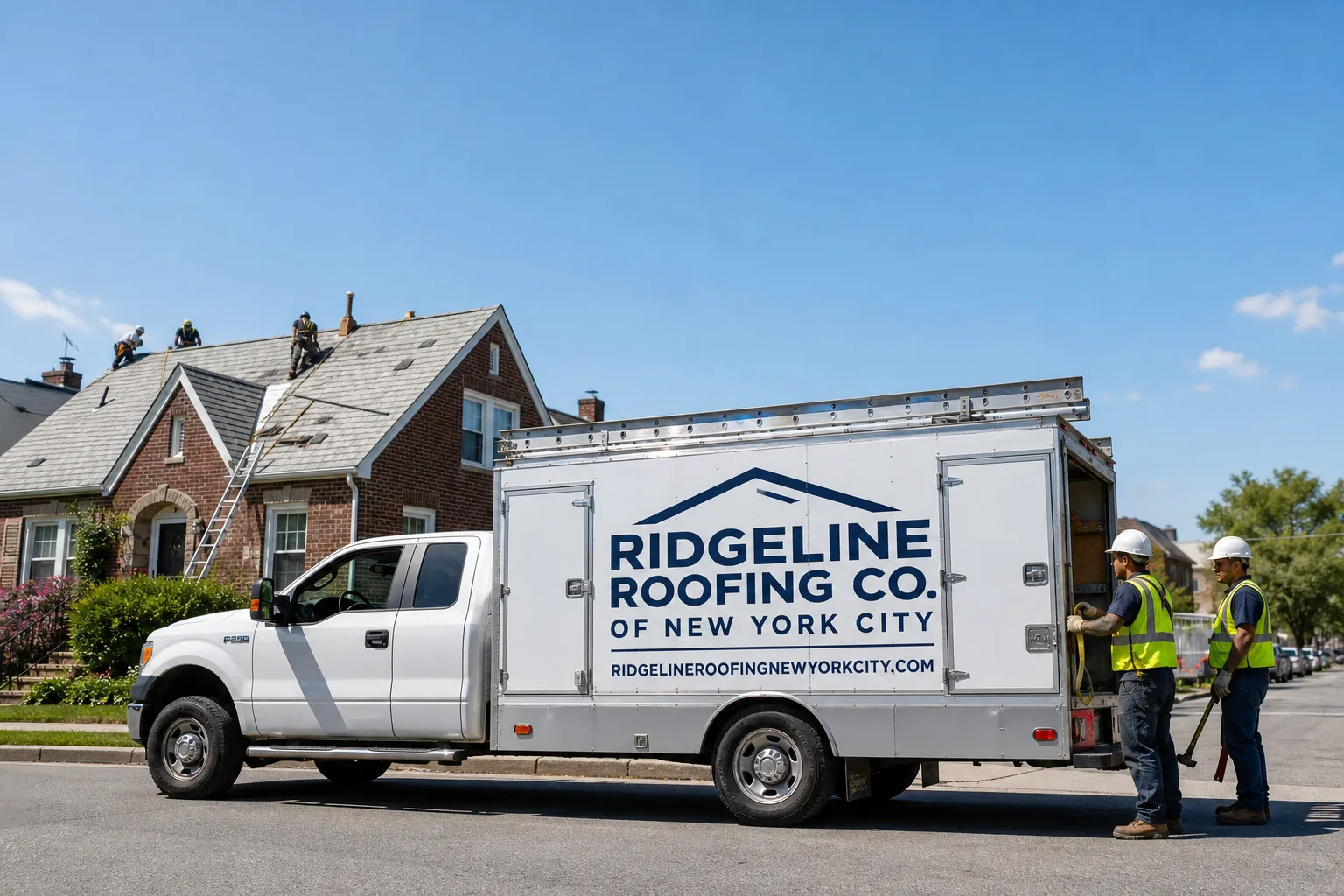
When a nor’easter tears through Nassau County, Plainedge homeowners don’t have time to wait on contractors from three towns away. We’re Ridgeline Roofing Co., and we’ve been answering emergency calls in the 11714 ZIP since 2016. A live person picks up our phones 24 hours a day, every day, and our crews know the difference between a Plainedge Cape Cod on Charles Street and a ranch on Stewart Avenue - because we’ve worked on both, many times over. Most emergency calls in Plainedge reach us within 30 minutes, and we aim to have tarps secured before the next band of weather hits. Call (866) 756-1978 now.
Why Ridgeline Roofing Co. of New York City Is Plainedge’s Preferred Emergency & Storm Damage Company
Plainedge is not a place for storm chasers. Homeowners here remember who showed up after Hurricane Sandy, and who disappeared with a deposit. We’ve earned our reputation across Nassau County by doing what we say we’ll do, then standing behind it.
Our reviews from Plainedge customers consistently mention the same things: we answer the phone at 2 a.m., we explain what we’re seeing in plain language, and we don’t invent damage that isn’t there. That matters in a community where neighbors talk on front porches and share contractor names at the PTA meeting.
Response time to Plainedge averages under 45 minutes from initial call to truck arrival. We keep materials staged on the Nassau side of the county line, not back in Queens or out in Suffolk, so we’re not burning daylight in traffic when your living room ceiling is dripping.
Here’s what sets us apart from contractors who just “also serve” Plainedge. We know the Town of Oyster Bay permitting process by heart. We know which streets flood first during a spring nor’easter, where the mature oak canopy drops limbs on shallow-pitch roofs, and why a Cape Cod knee wall in Plainedge will leak in ways a colonial in Bethpage won’t. That local knowledge saves hours on every job. And it keeps homeowners from paying twice when an out-of-area roofer misses a code detail.
Our Emergency & Storm Damage Services in Plainedge
Storm Damage Repair
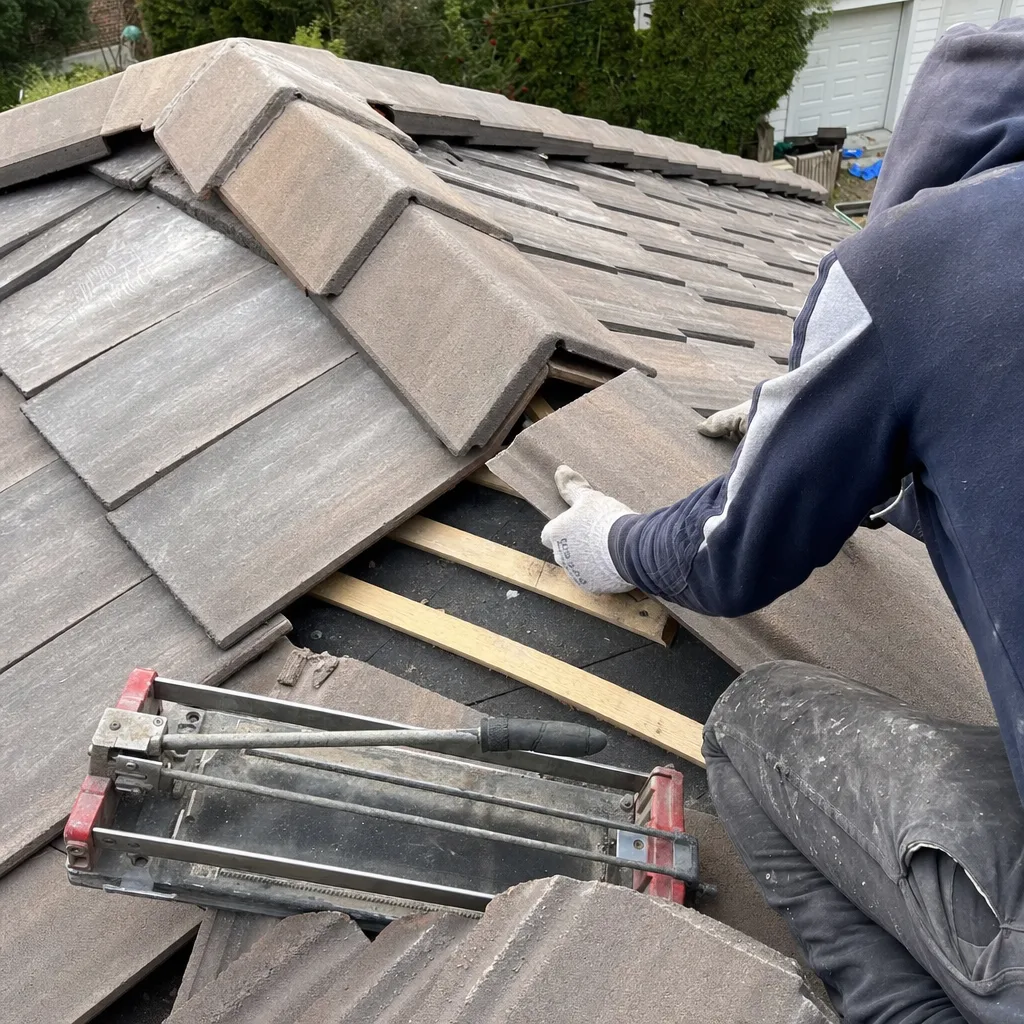
Plainedge’s housing stock - mostly built between 1948 and 1965 - carries hidden vulnerabilities that newer suburbs don’t face. After a nor’easter, we respond to calls about missing shingles, lifted flashing, and water stains on bedroom ceilings. But the real work often starts once we pull back layers of roofing and find original board-plank sheathing that’s been rotting quietly for decades. Our Emergency & Storm Damage crews are trained to assess whether the damage is isolated or systemic, then repair with materials that match the existing roof plane. We document everything with photos from your actual roof, not the driveway, so you see what we see.
Emergency Tarp
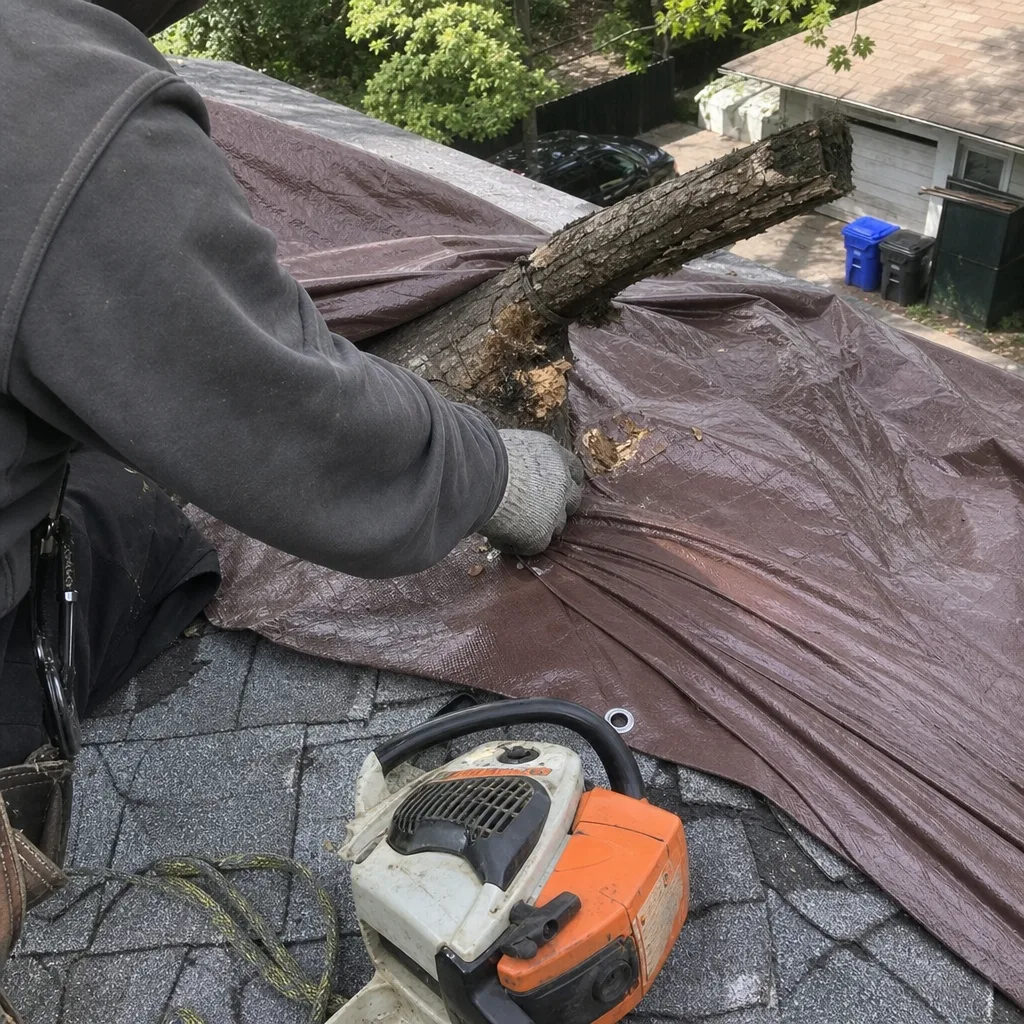
A tarp is a temporary roof, not a permanent fix, but it has to be done right or it causes more damage than it prevents. In Plainedge, we secure tarps with methods that account for the shallow eave pitches common on local Cape Cods - pitches where wind gets underneath a poorly anchored tarp and peels it back in hours. We use perimeter strapping and weighted ballast systems that hold through multiple storm cycles, not just until we drive away. If your home is on a street like Hempstead Turnpike or Hicksville Road, exposure to crosswinds is higher, and we adjust our anchoring accordingly.
Insurance Claims
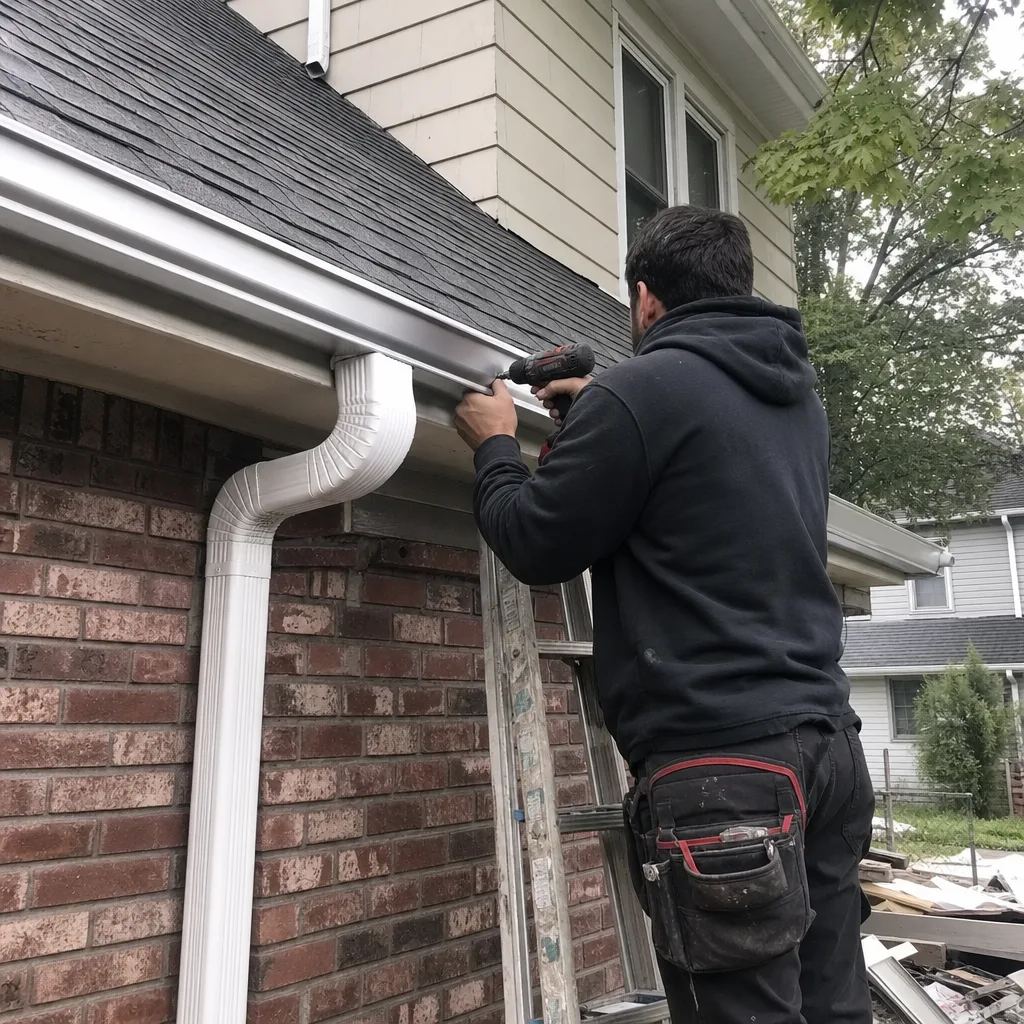
Navigating an insurance claim after storm damage is paperwork-heavy and detail-sensitive. We work directly with adjusters, providing the photo documentation, material specifications, and code-compliance evidence they need to approve legitimate claims. In Plainedge, that often means proving that hidden sheathing damage existed before the storm and was not “pre-existing neglect” - a distinction that can mean thousands of dollars in coverage. We also flag when a carrier’s preferred contractor is unfamiliar with Nassau County’s ice-and-water shield requirements, which can lead to denied supplemental claims after a failed inspection. Our estimates are written, itemized, and designed to withstand scrutiny.
Wind Damage
The same mature tree canopy that gives Plainedge its character becomes a liability when gusts hit 50-plus. We see wind damage concentrated along the exposed edges of roofs - rake edges on gable ends, ridge lines, and the vulnerable transitions where a one-story addition meets a two-story original. On older homes with layered shingles, wind uplift often exposes the failure point: nails driven into rotted sheathing that no longer hold. We don’t just replace what blew off. We test the substrate, replace compromised decking, and install to current wind-resistance standards using Atlas or Tamko shingles rated for the exposures common in coastal Nassau.
What happens when you call
- 1
A real person answersNo phone trees - you reach a local pro.
- 2
You get an upfront price rangeHonest numbers before anyone is dispatched.
- 3
A background-checked tech heads outLicensed & insured, dispatched right away.
- 4
You approve before work beginsNothing starts until you say go.
Trusted Brands We Service in Plainedge
We are authorized installers for seven manufacturer lines, and we keep stock on hand for Plainedge emergency calls: GAF, CertainTeed, Owens Corning, IKO, Atlas, Tamko, and Boral. For storm damage repairs, that means no waiting two weeks for a special order while your tarp holds against the weather. We match existing shingle profiles and colors from current lines, and when a legacy product is discontinued, we source the closest equivalent and document the substitution for your records. IKO and Atlas products are particularly well-suited to Plainedge’s replacement market - they perform reliably on the moderate pitches common here, and their fastening patterns work with the 5/8″ OSB decking we typically install when original board sheathing has failed.
Common Emergency & Storm Damage Problems We See in Plainedge Homes
- Hidden rot in original board-plank sheathing. Plainedge’s post-war homes were built with 1×6 or 1×8 pine boards as roof decking, not plywood. Sixty to seventy years of layered shingles trap moisture against these boards. When wind or hail damage forces a tear-off, we regularly find sections that have delaminated, rotted at the rafter bays, or pulled loose from their nails. The shingles above looked intact. The structure beneath did not.
- Ice damming at shallow eave lines. Cape Cods and ranches with shallow front-eave pitches are everywhere in Plainedge, from streets near East Plainview Road to the blocks off Hicksville Road. Snow loads sit longer, meltwater backs up, and water intrudes at the knee-wall line or top plate. By the time you see a ceiling stain, the sheathing and insulation are already wet.
- Overlay re-roofs with inadequate deck thickness. Multiple generations of homeowners have added shingle layers to avoid the cost of a full tear-off. The result: decking too thin to meet current fastener pull-through requirements. When wind hits, nails strip through rather than hold. We see this on homes that “never had a problem before” - until the third or fourth overlay finally fails structurally.
- Failed step flashings and valley seams from freeze-thaw cycling. Long Island’s February and March temperature swings expand and contract metal flashings. On older Plainedge roofs installed without full ice-and-water shield, this cycling opens gaps at critical junctions. Water follows the path of least resistance, often appearing far from its entry point.
Pricing for Emergency & Storm Damage in Plainedge, NY
We believe in upfront numbers. Here’s what emergency and storm damage work typically costs in the Plainedge market:
- Emergency tarp service: $350-$650, depending on roof area and access difficulty
- Storm damage shingle repair (localized, no decking): $450-$950
- Sheathing replacement (board-plank to OSB, per 100 sq. ft.): $800-$1,400
- Wind damage repair with partial decking replacement: $1,200-$3,500
- Full insurance claim coordination and documentation: included with repair estimate, no separate fee
- Ice-and-water shield upgrade to Town of Oyster Bay spec: $2.50-$4.00 per linear foot at eaves and valleys
These ranges reflect Plainedge’s specific conditions: older housing stock requiring more substrate work, Nassau County permit fees, and the material quantities needed for proper code compliance. The price we quote is the price you pay. We don’t tack on “emergency premiums” after dark, and we don’t discover mysterious add-ons mid-job. Every estimate is written, photographed, and signed before work begins. Call (866) 756-1978 for a free, no-obligation assessment - estimates are free, even if you choose to wait on repairs.
We Also Serve Cities Near Plainedge
Our emergency response covers the full central Nassau corridor. We regularly answer calls from Plainedge neighbors in Bethpage, Levittown, Old Bethpage, and South Farmingdale - often within the same storm cycle, because damage patterns don’t respect municipal boundaries. Our crews know the local roads, the permit offices, and the insurance adjusters who work this territory. That regional familiarity means faster response and fewer bureaucratic delays for every homeowner we serve.
Serving Plainedge, NY - Our Local Coverage Area
We’re based in the Plainedge area and know this community well. Use the map below to see our service coverage - if you’re nearby, we can almost certainly help.
FAQs - Emergency & Storm Damage in Plainedge
The Town of Oyster Bay enforces a Nassau County requirement that ice-and-water shield extend 24 inches inside the interior warm-wall line - a specification that contractors who primarily work Suffolk County municipalities routinely underestimate. We’ve been called in after failed inspections where the roofer installed standard 6-foot rolls at eaves, only to have the inspector flag insufficient coverage at the rake and valley transitions. The correction requires removing finished courses and reinstalling, often at the homeowner’s expense. We build to the Nassau spec from the start, so permits pass the first time.
Original board-plank sheathing can sometimes be spot-repaired if the damage is isolated and the surrounding boards are sound, but in Plainedge we find full replacement is more often the honest recommendation. After a nor’easter, we responded to a Plainedge Cape Cod on Hicks Avenue where the original board-plank sheathing had rotted under three generations of shingles; we stripped to the rafters, installed new 5/8″ OSB, GAF Timberline shingles, and the mandatory Town of Oyster Bay ice-and-water shield spec, all before the next freeze. Spot repairs on compromised sheathing are temporary fixes that fail again - and our 90-Day Done Right Promise means we don’t do temporary.
Pure emergency tarping does not require a Town of Oyster Bay permit, provided it is temporary and does not involve structural attachment or sheathing replacement. If the tarp installation reveals damage requiring decking repair, shingle replacement, or flashing work, a permit is required before permanent repairs proceed. We handle all permit applications as part of our standard workflow, and we never leave a homeowner scrambling with town paperwork after a storm. Call (866) 756-1978 and we’ll clarify what your specific situation requires - estimates are free.
Shallow-pitch eaves create higher wind uplift forces at the roof perimeter, which insurers sometimes dispute as “pre-existing design deficiency” rather than storm-related damage. We document the mechanical failure mode - whether nails pulled through decking, shingles delaminated at the seal strip, or wind-borne debris caused impact damage - with photos that isolate the storm causation from the underlying geometry. Our estimates specify code-compliant repairs that address both the immediate damage and the vulnerability, which helps adjusters approve supplements for proper decking and ice-and-water shield upgrades. We’ve successfully advocated for Plainedge homeowners whose initial claims were undervalued by thousands.
Step flashing and valley metal fatigue from freeze-thaw cycling, compounded by inadequate original underlayment. Long Island nor’easters drive heavy wet snow and wind-driven rain directly into the shallow-pitch eave lines typical of Plainedge Cape Cods, making ice damming and soffit rot recurring failure points each winter. The island’s freeze-thaw cycling through February and March stresses step flashings and valley seams that were often installed without proper ice-and-water shield under older re-roofs. By the time water shows on a ceiling, multiple layers of the roof system have already been compromised. Early inspection after any significant storm prevents the small repair from becoming a full replacement.
Named for the ridge - the line where a roof proves itself. If yours has been tested by a Long Island storm and found wanting, we’re here to make it right. Call (866) 756-1978 any hour, day or night. A live person will answer, send a background-checked, uniformed technician to your Plainedge home, and give you an honest assessment with no pressure and no obligation. Done right - and if it’s not, we make it right. That’s the Ridgeline way, and we’ve stood behind it since 2016.
Written by Sal Benedetto, Owner at Ridgeline Roofing Co., serving Plainedge since 2016.