
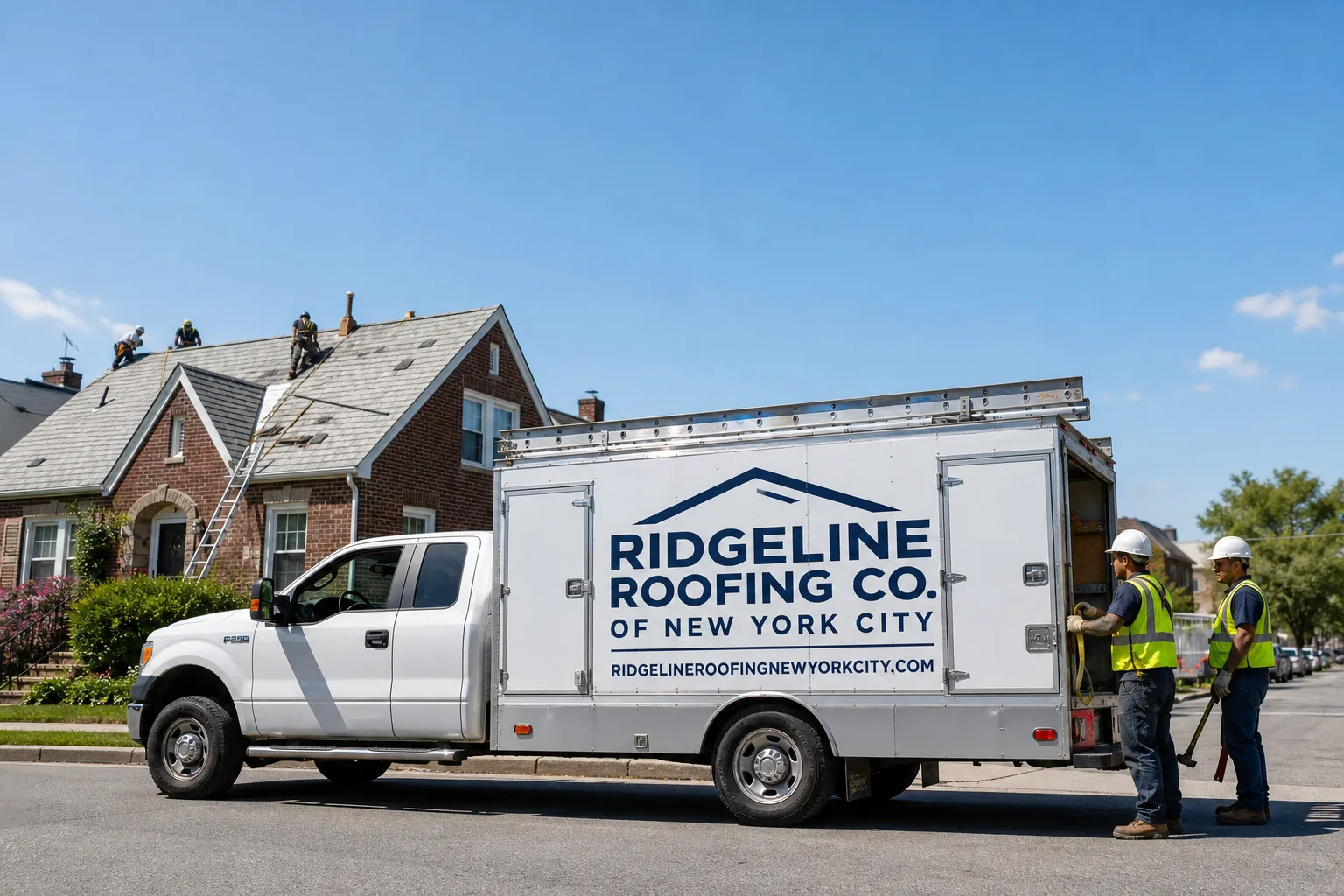
Fast, Reliable Emergency & Storm Damage Across University Heights
When a nor’easter tears at your parapet or ice backs up your roof drain, you need a crew that knows what holds on a 1920s flat roof and what fails. We’re Ridgeline Roofing Co., and we’ve been answering calls in the Bronx since 2016. A live person picks up our phone 24 hours a day, including the middle of a storm, and we typically reach University Heights within 45 minutes of your call. Our Emergency & Storm Damage team understands the ridge-top wind exposure, the pre-war building stock, and the permit realities that out-of-town storm chasers miss. Call (866) 756-1978 now for immediate response.
Why Ridgeline Roofing Co. of New York City Is University Heights’s Preferred Emergency & Storm Damage Company
We’ve worked on Cedar Avenue, University Avenue, and throughout the 10453 zip code for decades. University Heights homeowners recognize our trucks because we’re not passing through, we’re local. Our 90-Day Done Right Promise means if it’s not right, we come back and make it right, no paperwork, no arguing.
Our response time to University Heights averages under 45 minutes for emergency calls because our crews are based in the Bronx, not dispatched from Westchester or New Jersey after the weather clears. We know the NYC DOB permit process for shared-wall buildings, the coal-tar pitch legacy hiding beneath many overlays, and how water migrates through attached structures when a parapet fails. That’s knowledge you can’t Google.
Sal Benedetto, our owner, has built this company on the principle that a roof proves itself at the ridge, the line where everything shows. We bring that standard to every University Heights job we touch.
Our Emergency & Storm Damage Services in University Heights
Emergency Tarp
When wind peels your modified bitumen membrane away from the parapet at 2 a.m., you need the opening covered before water reaches the plaster below. Our emergency tarp service in University Heights deploys within the hour, using weighted ballast systems designed for flat roofs, not pitched-roof methods that won’t hold. We document everything with photos from your actual roof, not the sidewalk, so your insurance adjuster sees exactly what happened. Most University Heights emergency tarps are installed in a single visit, with permanent repair scheduled once weather permits.
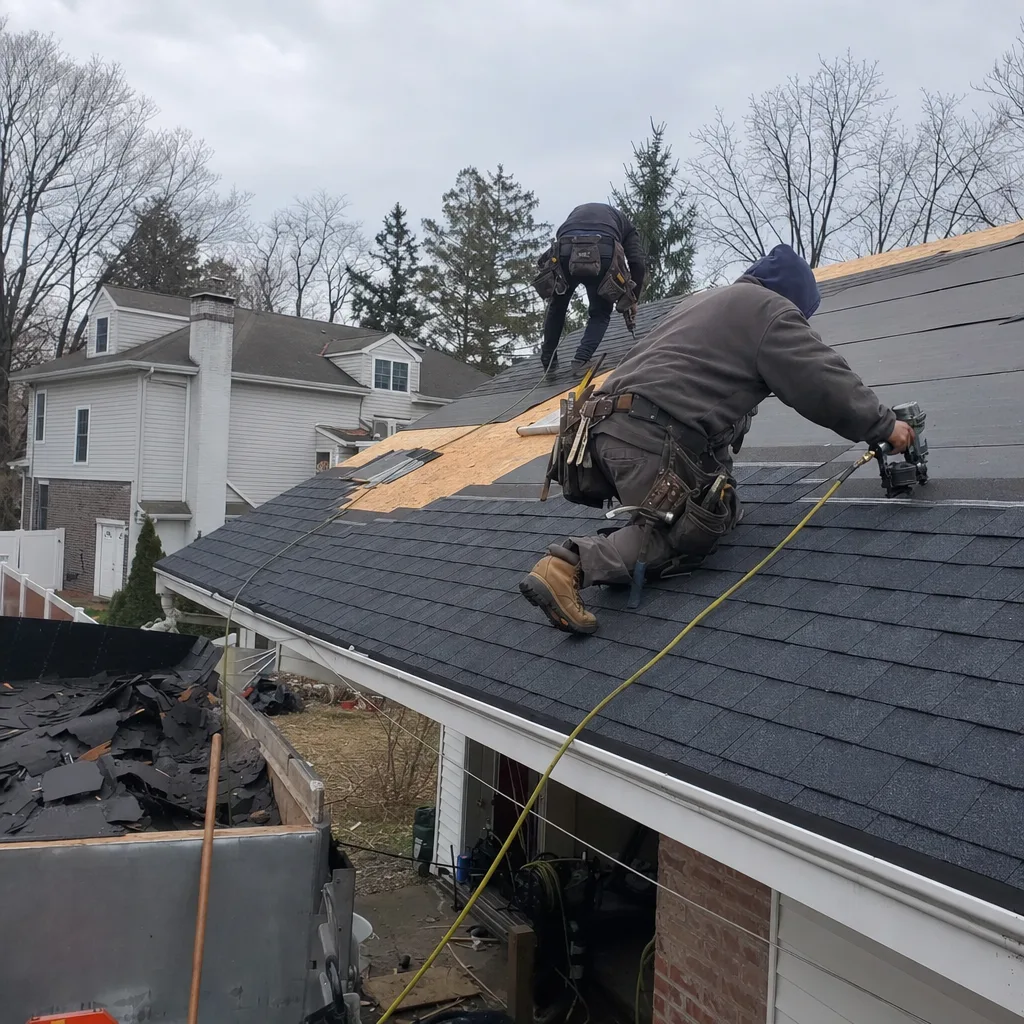
Storm Damage Repair
University Heights’s ridge-top position exposes its flat, multi-family roofs to higher wind loads than lower-lying neighborhoods, accelerating membrane edge-lift at parapets during storms. After a November nor’easter, our crew responded to a four-story pre-war building on Cedar Avenue where a 1920s modified bitumen membrane had torn loose at the parapet coping, allowing water to cascade into three adjacent attached units. We deployed a temporary tarp and scheduled a full tear-off, discovering the original coal-tar pitch layer beneath, a hidden cost that only crews familiar with pre-war Bronx stock anticipate. We repair the damage right, and if it’s not right, we make it right.
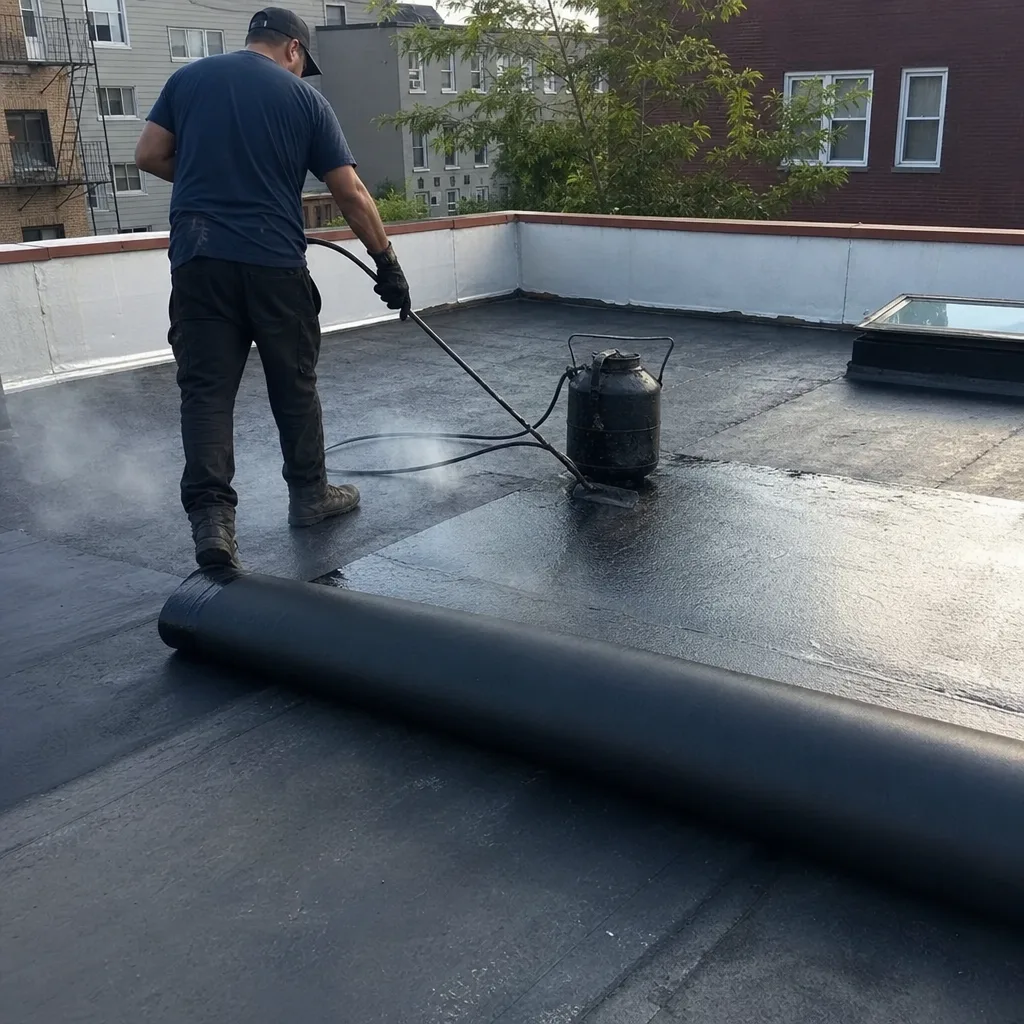
Insurance Claims
Storm damage claims for University Heights’s older multi-family buildings require documentation that most adjusters don’t see every day: coal-tar pitch layers, shared-wall water migration, parapet wall failures versus simple membrane leaks. We provide photo-documented inspections, written scope-of-work estimates, and direct communication with your carrier. Our estimates use the same pricing databases most insurance companies reference, so there’s less back-and-forth. We’ve helped University Heights building owners navigate claims after Hurricane Ida, multiple nor’easters, and the increasingly severe thunderstorm seasons of recent years.
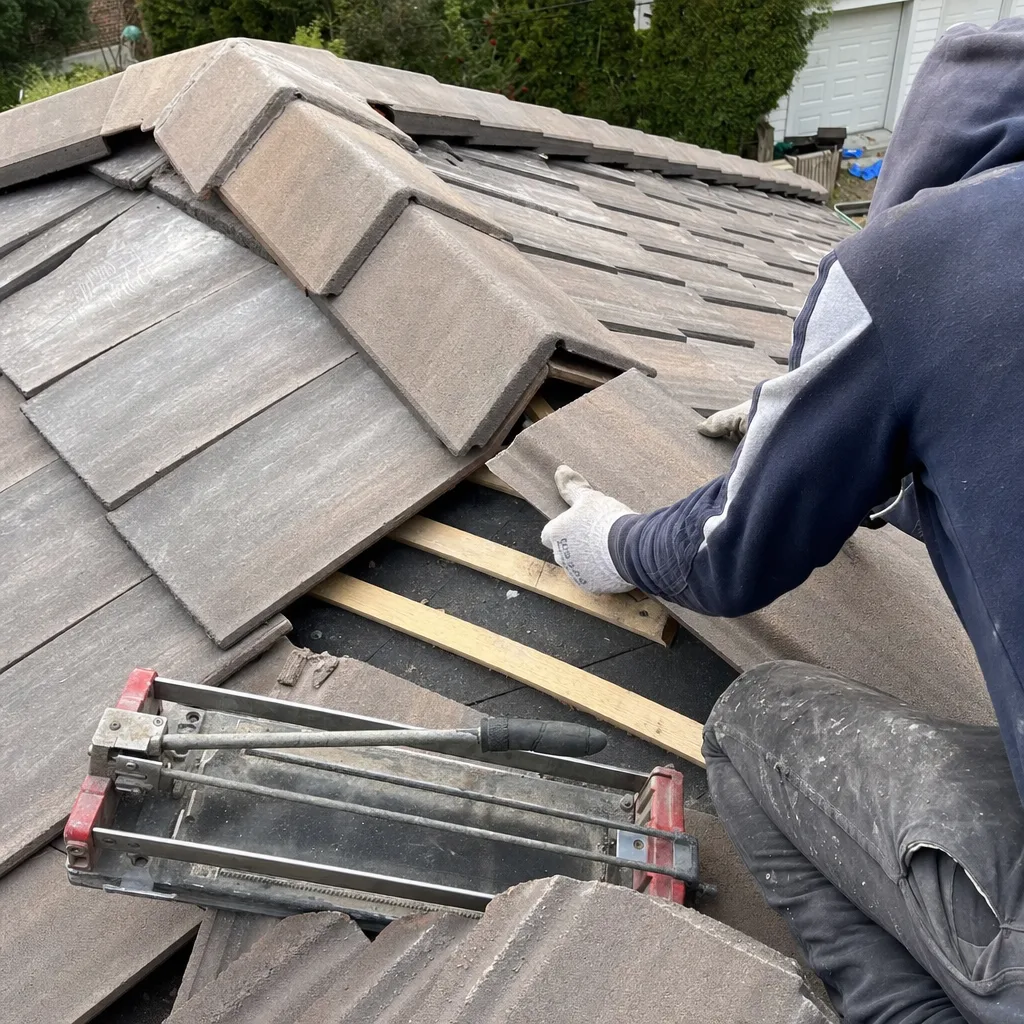
Wind Damage
The exposed elevation of University Heights means wind damage here follows different patterns than in lower-lying Morris Heights or Fordham. We see flashing torn from parapet walls, HVAC curbs lifted and reseated improperly by previous contractors, and membrane edges that have been working loose for years before a single storm finishes the job. Our wind damage assessments check the whole roof system, not just the obvious tear, because in these attached buildings, one failure point often signals others waiting to follow.
What happens when you call
- 1
A real person answersNo phone trees - you reach a local pro.
- 2
You get an upfront price rangeHonest numbers before anyone is dispatched.
- 3
A background-checked tech heads outLicensed & insured, dispatched right away.
- 4
You approve before work beginsNothing starts until you say go.
Trusted Brands We Service in University Heights
We are authorized installers for GAF, CertainTeed, Owens Corning, IKO, Atlas, Tamko, and Boral, which means we stock membranes, flashing, and accessories that match what is already on your roof. For University Heights’s flat-roof buildings, we commonly work with modified bitumen systems from IKO and Atlas, materials designed for the exact freeze-thaw cycling and UV exposure these ridge-top roofs endure. We don’t substitute materials without your knowledge. The brand we specify is the brand we install.
Common Emergency & Storm Damage Problems We See in University Heights Homes
- Parapet wall leaks: Aged parapet flashing fails under freeze-thaw, letting storm water seep into shared-wall cavities and adjacent buildings. In University Heights’s attached row houses, one leaking parapet routinely damages two or three neighboring units before anyone calls.
- Flat-membrane edge-lift: High winds at the ridge top peel modified bitumen or built-up roofing away from the deck, especially at roof drains and vents. The elevation here makes this more common than in lower Bronx neighborhoods.
- Coal-tar overlay surprises: Older layers, often coal-tar pitch, beneath later overlays complicate emergency repairs, as partial patches can delaminate from the incompatible old surface. Contractors unfamiliar with pre-war Bronx stock routinely underbid these jobs because full tear-off requires awareness of coal-tar handling, adds unexpected labor hours, and may trigger additional NYC DOB inspection requirements.
- Interior drain backup: Roof drains clog with leaves and debris, then freeze-thaw cycles crack the drain field, causing water to pool and back up into occupied spaces. In University Heights’s multi-family buildings, a single clogged drain can affect multiple floors.
Pricing for Emergency & Storm Damage in University Heights, NY
A typical emergency tarp in University Heights runs $350-$650 depending on roof size and access complexity. Storm damage repair for parapet flashing or membrane patches generally falls between $800 and $2,400. Full membrane replacement for a standard University Heights multi-family flat roof, including coal-tar pitch tear-off when present, typically ranges from $8,500 to $18,000. Insurance claims assistance and documentation are included at no additional charge when we perform the repair work.
What moves the number: roof square footage, number of penetrations (vents, drains, HVAC units), whether coal-tar pitch is present beneath existing layers, and whether NYC DOB permits are required for shared-wall work. We provide no-hassle upfront pricing. The number on the estimate is the number on the invoice. Call (866) 756-1978 for a free estimate.
We Also Serve Cities Near University Heights
Our crews respond daily to University Heights and the surrounding neighborhoods: Morris Heights to the southwest, East Tremont and Tremont to the southeast, and Fordham to the east. The same flat-roof expertise, the same 24/7 live answer, the same written 90-Day Done Right Promise applies whether you’re on Sedgwick Avenue or Arthur Avenue.
Serving University Heights, NY - Our Local Coverage Area
We’re based in the University Heights area and know this community well. Use the map below to see our service coverage - if you’re nearby, we can almost certainly help.
FAQs - Emergency & Storm Damage in University Heights
The only certain way is a core sample or small test cut, which our technicians can take during an inspection without creating a new leak. Buildings constructed between the 1920s and 1950s in University Heights frequently have coal-tar pitch built-up roofing beneath one or more later overlays, and the dark, glossy odor of coal-tar is unmistakable to experienced crews. If we find it, we’ll explain how it affects your repair options and pricing before any work begins. Call (866) 756-1978 for an inspection, estimates are free.
Sometimes, but often no. If the membrane tore because the underlying substrate is saturated or deteriorated, a patch will fail within the next storm cycle. We inspect the deck, the insulation, and the adjacent membrane to determine whether a targeted repair will hold or whether the damage pattern indicates wider system failure. In University Heights’s wind-exposed ridge-top buildings, parapet-edge damage frequently signals that the membrane has been working loose for years. We’ll give you an honest assessment, not the quickest sale.
No. Emergency tarping to prevent further water intrusion does not require a permit, provided it is temporary and properly secured. However, permanent repairs, full tear-offs, or any work affecting shared walls or parapet structures in University Heights’s attached buildings typically do require DOB filing. We handle permit applications as part of our standard repair scope, so you’re never left navigating city bureaucracy alone. Call (866) 756-1978 and we’ll walk you through what your specific situation requires.
It depends on the cause and your policy language. If the clog was caused by storm debris and the backup resulted in sudden, accidental damage, many policies cover it. If the drain was clogged due to years of neglected maintenance, insurers may deny the claim. We document the drain condition, the debris type, and the water damage pattern to help your adjuster make an informed decision. Our insurance claims assistance is included when we perform the repair work.
Because University Heights’s pre-war flat roofs have typically endured decades of overlay-on-overlay repairs, and each new layer adds weight while masking underlying deterioration. By the time we see these buildings, the substrate is often saturated, the insulation compromised, and multiple penetration points leaking. Extensive patching becomes a game of whack-a-mole that costs more over five years than a single properly executed replacement. We explain this honestly, show you the photos from your roof, and let you decide. A square deal means you understand what you’re buying and why.
Written by Sal Benedetto, Owner at Ridgeline Roofing Co. of New York City, serving University Heights since 2016.