
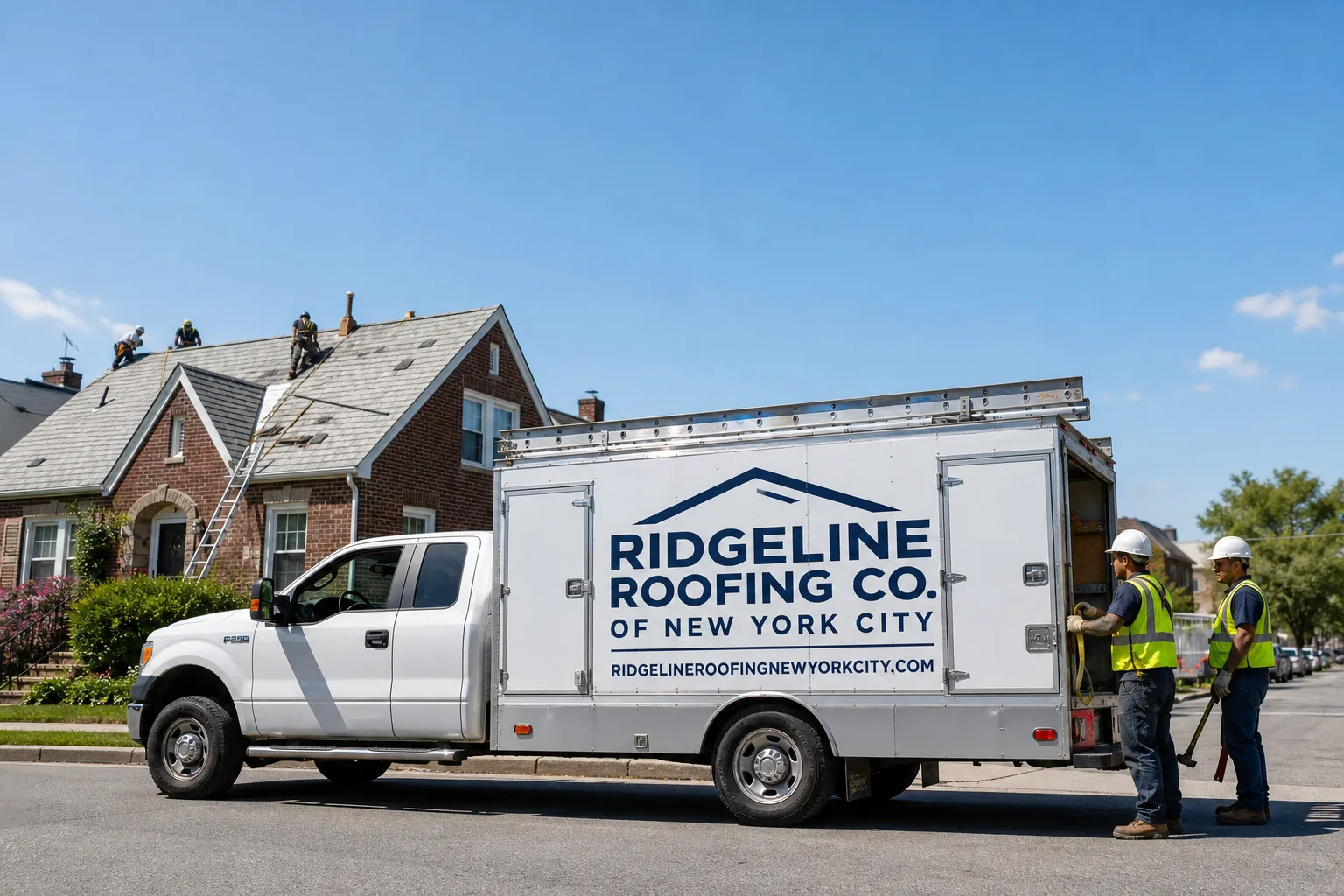
Fast, Reliable Specialty Roofing Across The Bronx
Specialty roofing in The Bronx typically runs between $8,500 and $22,000 for flat-roof membrane systems on multi-family buildings, with most inspections scheduled same-day and work starting within 48 hours. We’re Ridgeline Roofing Co. of New York City, and we’ve been climbing The Bronx’s flat roofs since 2016. Call (866) 756-1978 - a live person answers, even at 2 a.m. during a January freeze-thaw cycle.
The Bronx is not Westchester. The roofing trade here is fundamentally different: parapet walls, elevator bulkheads, rooftop water tanks, and NYC DOB permits for work that suburban contractors never touch. Our crews know the alley-load logistics of Morris Park, the parking constraints around Parkchester, and the wind tunneling between attached brick rows in Van Nest. We don’t chase storms. We’re here year-round, with local apprentices we’ve trained into journeymen who understand how a flat roof in 10462 fails differently than one in Yonkers.
Why Ridgeline Roofing Co. of New York City Is The Bronx’s Preferred Specialty Roofing Company
We’ve served The Bronx for over 42 years, and our reputation here was built one building at a time. Homeowners in Unionport and property managers across Parkchester know our trucks. They know our 90-Day Done Right Promise means what it says: if it’s not right, we come back and make it right. No paperwork runaround. No arguing.
Our technicians are background-checked, uniformed, and trained to document every inspection with photos from your actual roof - not a scary speech in the driveway. In The Bronx’s dense housing market, that matters. You can’t see membrane seam failure from the sidewalk. You need someone who climbs up, shows you the split around the drain collar or the deteriorated coping cap letting water into your top-floor walls.
Response time to The Bronx averages under 90 minutes for emergency calls. Our phones are staffed by a live person 24 hours a day, seven days a week - no voicemail trees, no callback windows. During nor’easters, when heavy wet snow loads stress aging membranes across the borough, that accessibility separates contractors who show from those who disappear until spring.
Sal Benedetto, who leads Ridgeline Roofing Co., grew up in the trade his father started in 1984. He still reviews the photos from every The Bronx inspection personally. That continuity matters in a borough where some buildings haven’t been re-roofed since the 1980s, and where understanding the original construction - MetLife’s 1941-1942 Parkchester complex, prewar five-story walkups, NYCHA towers - is essential to diagnosing failure correctly.
Our Specialty Roofing Services in The Bronx
TPO Roofing
TPO - thermoplastic polyolefin - is the fastest-growing membrane in The Bronx for good reason. White reflective surfaces reduce cooling loads on flat-roofed brick buildings that bake in summer sun. We install fully adhered and mechanically attached TPO systems from GAF and CertainTeed, with welded seams rated for the wind uplift that corridor-effect buildings experience between dense rows. In Parkchester and Morris Park, where buildings sit close and wind accelerates, proper seam welding isn’t optional. We’ve replaced too many cut-rate TPO jobs where hand-sealed laps blew open during the first March nor’easter.
Modified Bitumen
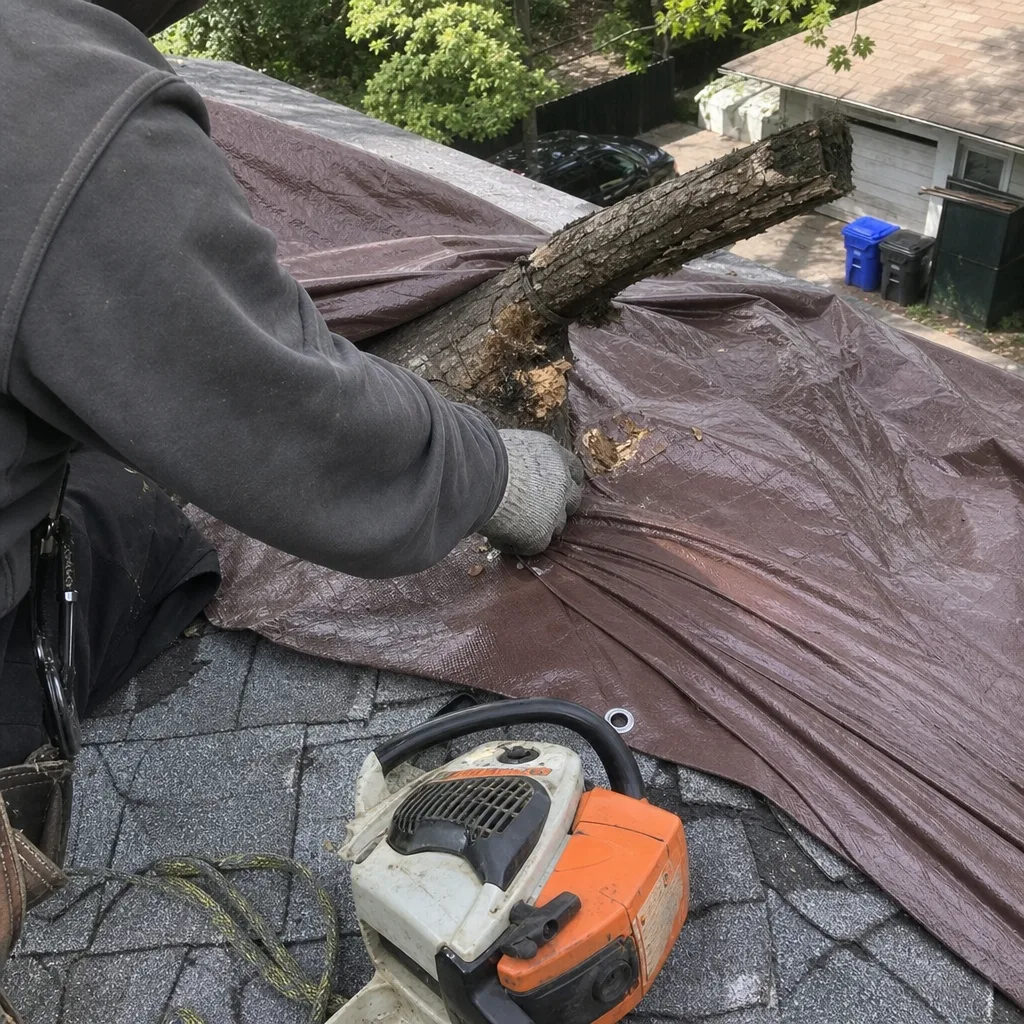
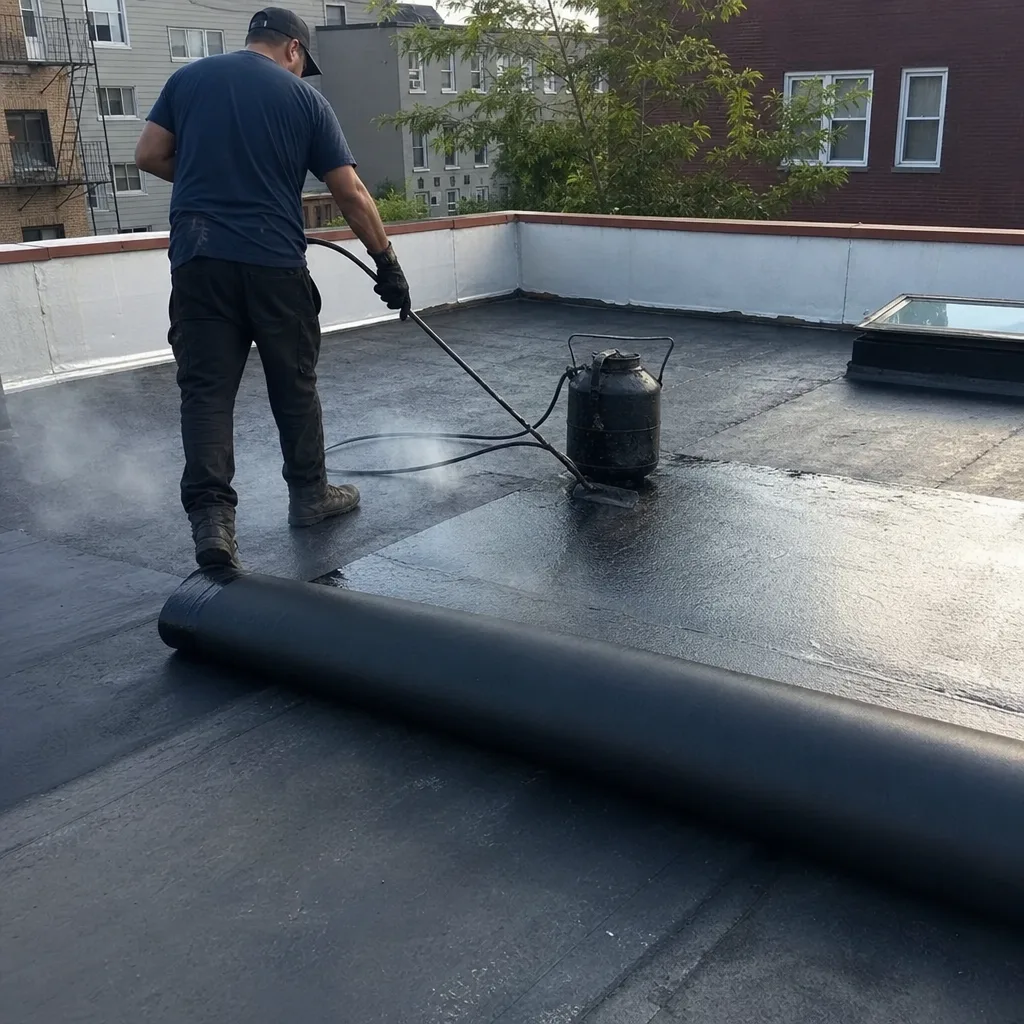
Modified bitumen - torch-down or cold-applied - remains the workhorse of The Bronx flat-roof market. It’s what MetLife specified for Parkchester’s 171 buildings in 1941, and what still covers thousands of prewar walkups from Van Nest to Unionport. We install two-ply SBS and APP systems from Atlas and IKO, with proper base sheets and cap sheets, fully torched or cold-adhered depending on your building’s insurance requirements and proximity to occupied units. The Bronx’s freeze-thaw cycles punish poorly installed modified bitumen. Water ponds, freezes in parapet seams, and splits the membrane. Our crews know where to look, and how to build in slope correction where drainage has failed.
Built-Up Roofing
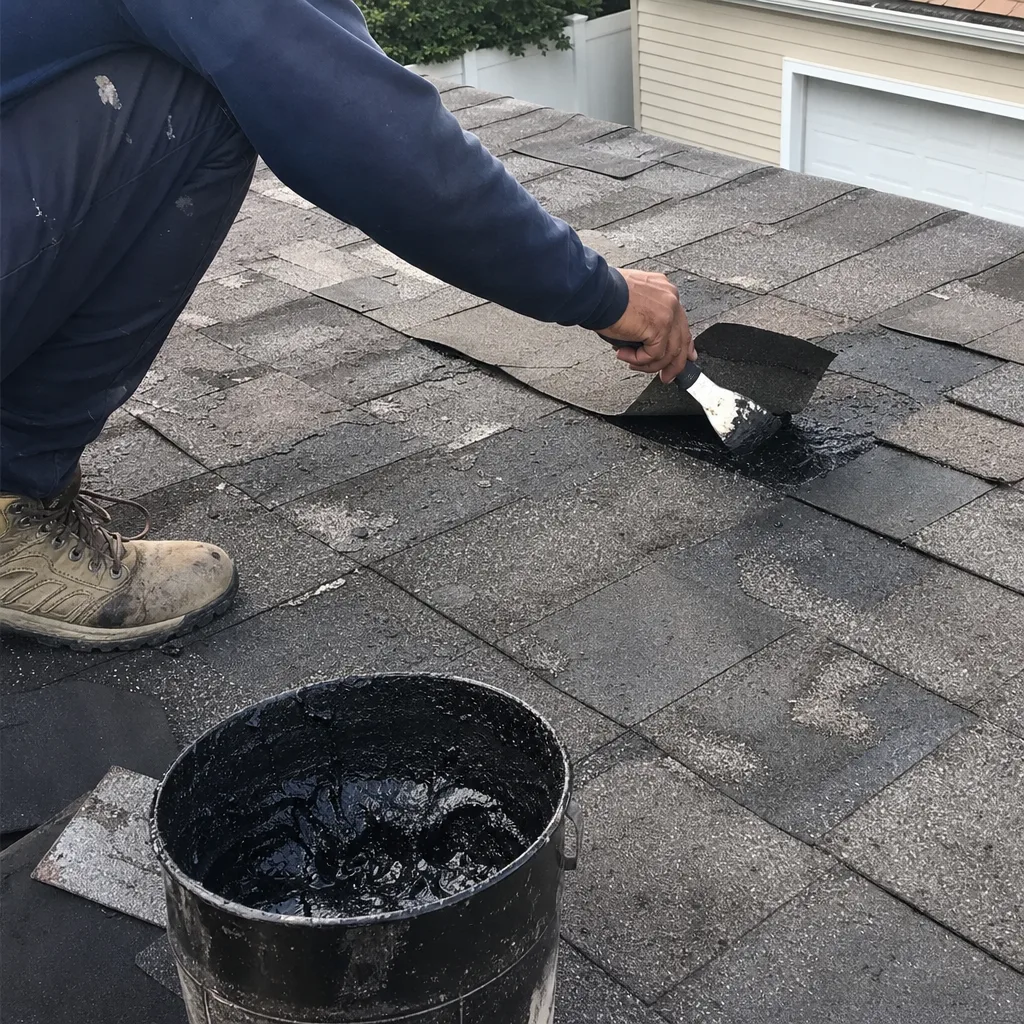
Built-up roofing - BUR, the traditional “tar and gravel” system - still has a place on The Bronx’s older commercial and institutional buildings. We install four-ply and five-ply systems with asphalt or coal-tar pitch, flood-coated and surfaced with gravel or mineral cap sheets. Boral supplies our modified bitumen and BUR components. On historic structures or where existing BUR is sound but weathered, we can install recovery systems that avoid the cost and disruption of full tear-off. The key is honest assessment: BUR that’s saturated and delaminated needs to come off. BUR that’s surface-dried can often be restored. We’ll show you the core cuts and let you decide.
EPDM Roofing
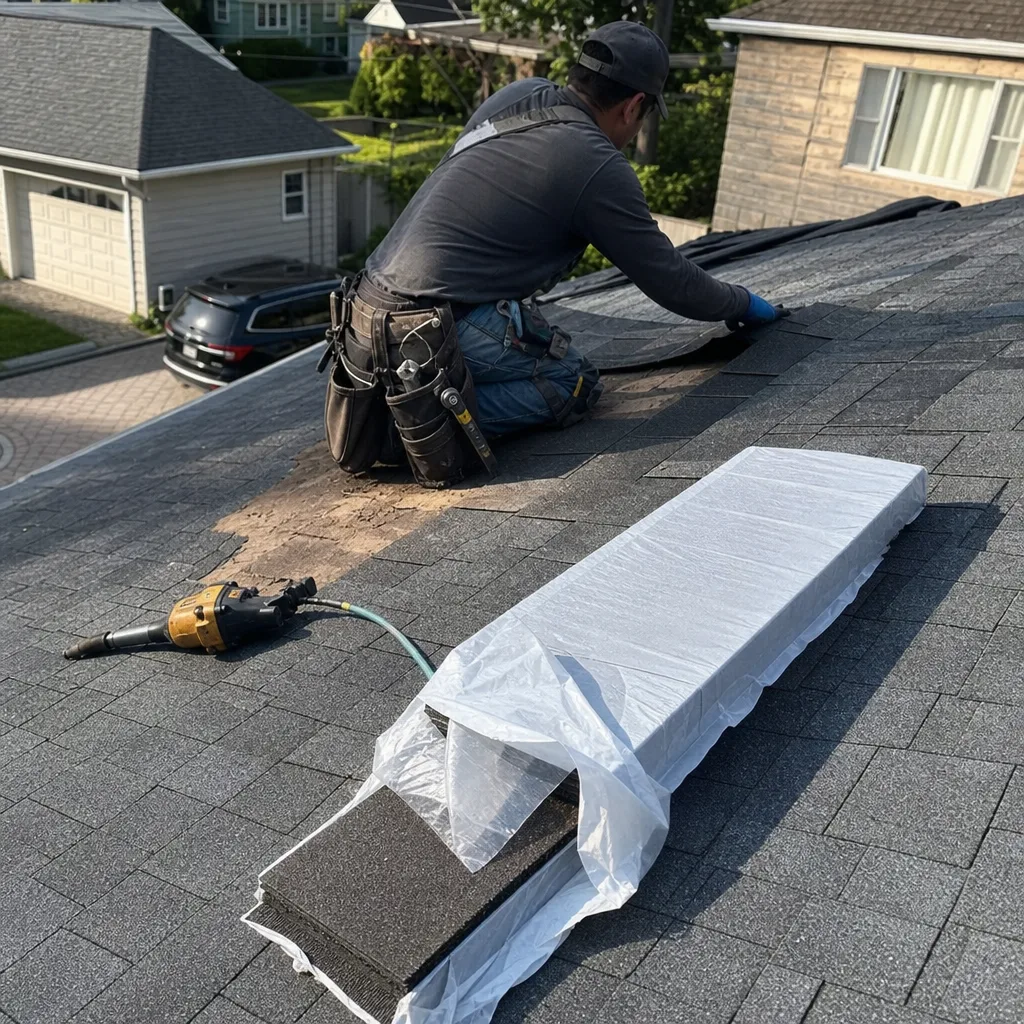
EPDM - the black rubber membrane - performs well on The Bronx’s larger commercial roofs where solar gain in winter offsets cooling concerns. We install fully adhered, ballasted, and mechanically attached systems from Carlisle and Firestone, with proper seam tape or liquid-applied splicing. EPDM’s weakness in The Bronx is the same as its strength: it’s black, so it expands and contracts dramatically in summer sun. That movement stresses seams and flashings. Our installations include reinforced perimeters and proper expansion details at parapet walls, where too many contractors simply run the membrane up and hope.
Solar Ready Roofing
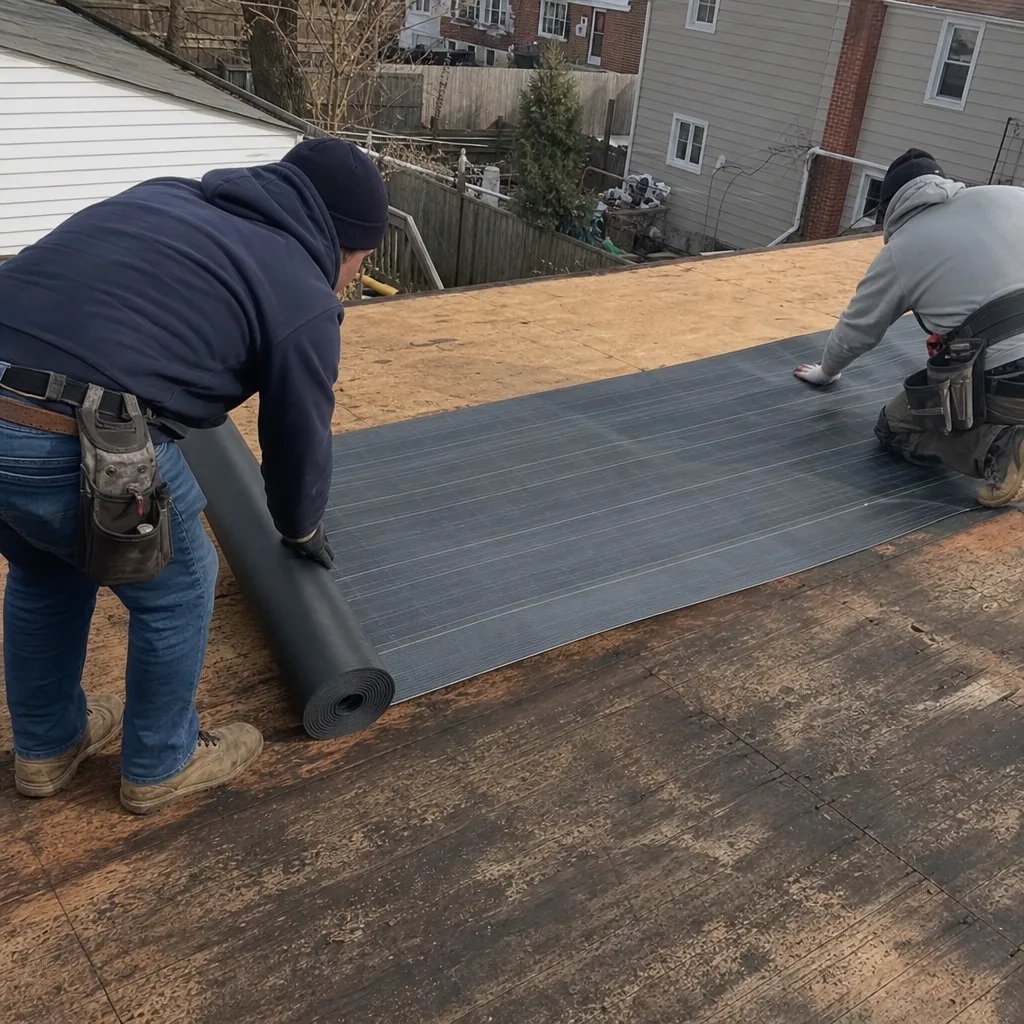
Solar ready roofing in The Bronx means designing the membrane system to accept panel racking without compromising waterproofing. We install standing-seam anchor points, sealed penetration sleeves, and membrane layouts that keep solar contractors from drilling blindly into your roof. On Parkchester’s flat roofs and the NYCHA towers nearby, solar ready design is increasingly specified in capital improvement plans. We coordinate with your solar installer, or recommend ones we’ve worked with locally, to make sure the roof warranty and the panel warranty don’t conflict.
Green Roof
Green roofs - vegetated assemblies with growing media and drainage layers - are viable on The Bronx’s newer construction and some reinforced older buildings. We’ve installed extensive green systems on commercial properties in Morris Park, where stormwater management incentives from NYC DEP offset installation costs. The structural load is the limiting factor: a saturated green roof adds 15-25 pounds per square foot. We assess your building’s capacity honestly. On prewar tenements with unknown framing, we may recommend a solar ready membrane instead, or a lightweight container system that doesn’t require full green-roof infrastructure.
What happens when you call
- 1
A real person answersNo phone trees - you reach a local pro.
- 2
You get an upfront price rangeHonest numbers before anyone is dispatched.
- 3
A background-checked tech heads outLicensed & insured, dispatched right away.
- 4
You approve before work beginsNothing starts until you say go.
Trusted Brands We Service in The Bronx
We’re authorized installers for seven manufacturer lines: GAF, CertainTeed, Owens Corning, IKO, Atlas, Tamko, and Boral. For The Bronx’s flat-roof market, we stock IKO modified bitumen base and cap sheets, Atlas TPO membrane in 60-mil and 80-mil thicknesses, and Tamko peel-and-stick underlayments for parapet wall transitions. Boral’s clay and concrete tile products see less use in The Bronx’s flat-roof environment, but we maintain certification for the occasional low-slope mansard or decorative bulkhead application. Local stocking matters. When a nor’easter is 48 hours out and your coping cap has separated, we can source matching membrane and flashing coil without waiting on a warehouse in Pennsylvania. Most The Bronx jobs start with material on-site the next morning.
Common Specialty Roofing Problems We See in The Bronx Homes
- Ponding water that freezes and thaws repeatedly. The Bronx cycles above and below freezing dozens of times each winter. Water that sits on low-slope roofs - often from clogged drains or failed slope fill - works into membrane seams and splits them from the inside out. We see this most on buildings in 10462 that haven’t had drainage maintenance in years.
- Deteriorated coping caps on parapet walls. Common on prewar brick buildings throughout Parkchester and Van Nest. The concrete or metal cap cracks, water enters the wall cavity, and interior plaster damage follows. Worse, NYC DOB classifies parapet repair as structural work under Local Law 11 scrutiny. Unpermitted coping replacement can trigger stop-work orders and fines that make the original roofing invoice look trivial.
- Improper TPO seam welding in wind-corridor buildings. Between dense attached rows in Morris Park and Unionport, wind accelerates and creates uplift pressure that hand-sealed or poorly welded TPO seams can’t resist. We’ve replaced membranes after two seasons because the original installer used a handheld roller instead of automatic hot-air welding on critical laps.
- Elevator bulkhead and water tank base flashings. Every The Bronx flat roof has penetrations. The original lead or copper flashings fatigue after 40+ years. We replace with stainless steel or coated aluminum counterflashing systems, sealed with compatible membranes, because patching with caulk or roof cement lasts one winter if you’re lucky.
Pricing for Specialty Roofing in The Bronx, NY
Specialty roofing in The Bronx runs $8,500-$14,500 for typical modified bitumen or TPO membrane replacement on a 1,500-square-foot flat roof section, including tear-off, insulation replacement where needed, and new coping caps. Larger commercial or multi-family buildings with complex penetrations, bulkhead details, and NYC DOB filing requirements range $15,000-$22,000. Built-up roofing recovery systems start around $6,500 where existing substrate is sound. Green roof assemblies begin at $18,000 and require structural engineering review.
What moves the number: access for material hoisting (The Bronx alleyways vary), existing insulation condition, number of penetrations to flash, and whether NYC DOB permits and Local Law 11 filings are required. We provide no-hassle upfront pricing. The number on our estimate is the number on your invoice. No surprises.
Call (866) 756-1978 for a free estimate. We’ll inspect, photograph, and explain what we found - no pressure, no deposit required to get the number.
| Service | Typical Range in The Bronx |
|---|---|
| Modified bitumen replacement (1,500 sq ft) | $8,500 - $14,500 |
| TPO full system with insulation | $10,000 - $16,000 |
| Built-up roofing recovery | $6,500 - $11,000 |
| Coping cap replacement with permit filing | $3,500 - $7,500 |
| Emergency membrane patch (same day) | $450 - $1,200 |
We Also Serve Cities Near The Bronx
Our Specialty Roofing in The Bronx crews live and work in the neighborhoods we serve. We regularly respond to Morris Park’s prewar co-ops, Parkchester’s mid-rise complexes, Van Nest’s attached brick rows, and Unionport’s mixed residential-commercial blocks. Same standards, same 90-Day Done Right Promise, same live-answer phones at midnight when ice dams back up into ceiling plaster.
Serving The Bronx, NY - Our Local Coverage Area
We’re based in the The Bronx area and know this community well. Use the map below to see our service coverage - if you’re nearby, we can almost certainly help.
FAQs - Specialty Roofing in The Bronx
Yes, if the work involves structural elements, parapet walls, or changes to the roof deck. NYC DOB requires permits for most full roof replacements on multi-family buildings and any work affecting parapet integrity. We handle filing, drawings, and inspection scheduling as part of our project management. Call (866) 756-1978 and we’ll confirm whether your specific scope requires permitting - estimates are free.
Caulk is a temporary bandage on a structural problem. Coping caps crack because of thermal movement, inadequate anchoring, or corroded supporting steel. Water enters behind the cap, runs down the wall cavity, and appears as interior stains far from the actual leak point. We replace coping caps with properly anchored, through-wall secured systems and integrated counterflashing - and we file the NYC DOB permit so you don’t face a Local Law 11 stop-work order mid-project.
Modified bitumen or TPO, depending on your building’s condition and budget. Modified bitumen matches Parkchester’s original 1941 construction and repairs easily. TPO offers better reflectivity and longer warranty terms. We recently replaced a deteriorated modified bitumen roof on a five-story walkup on Westchester Avenue in Parkchester. The old membrane had split around an elevator bulkhead, and we installed new GAF TPO with fully adhered seams and a stainless steel counterflashing system, sealing all penetrations to meet NYC DOB code. For a building-by-building recommendation, call for a free inspection.
Only if the structure can handle 15-25 pounds per square foot of saturated growing media. Most 1920s-1930s tenements in The Bronx were not engineered for that load. We assess framing capacity through structural review, and we’ll tell you honestly if a green roof is feasible or if a solar ready membrane or lightweight container system is the smarter choice. Call (866) 756-1978 to schedule a structural assessment - estimates are free.
Proper perimeter fastening and seam welding are critical in The Bronx’s wind corridors. We install TPO with manufacturer-specified fastening patterns at perimeters and corners, where uplift pressure concentrates. On modified bitumen, we use proper base sheet nailing and fully torched cap sheets with granule surfacing for ballast. The key is not skipping the edge details to save material. If your roof is more than 15 years old, call for a free wind-uplift assessment before the next storm season.
Written by Sal Benedetto, Owner at Ridgeline Roofing Co. of New York City, serving The Bronx since 2016.